
How to Find a Legitimate Crypto Recovery Service
By Steven Burton – Trusted Private Investigator
Learn how to find a legitimate crypto recovery service, avoid recovery scams, identify trusted investigators, and make informed decisions after crypto theft. The explosive growth of cryptocurrency has transformed global finance, opening new opportunities for investors, businesses, and everyday users. Unfortunately, this digital revolution has also created fertile ground for sophisticated fraud schemes. Cybercriminals routinely exploit the speed, anonymity, and borderless nature of digital assets.
Every day, victims lose cryptocurrency through fake investment platforms, phishing attacks, romance scams, wallet compromises, malicious smart contracts, impersonation schemes, and fraudulent exchanges. Once the funds disappear, many victims immediately search online for one thing: how to recover stolen crypto.
That search often leads to another, sometimes more devastating, danger.
The internet is crowded with self-proclaimed “crypto recovery experts” promising guaranteed recoveries, secret hacking techniques, or instant access to stolen funds. Many of these operators are secondary scammers. They target people who have already suffered financial losses, charging additional fees upfront while delivering little to no meaningful investigative work.
Finding a legitimate crypto recovery service requires careful evaluation, realistic expectations, and an understanding of how genuine blockchain investigations actually work. While not every case results in recovered assets, a professional investigator can identify where funds moved, preserve valuable evidence, and provide documentation that may support legal action or exchange cooperation.
Here is your comprehensive guide to separating legitimate professionals from opportunistic scammers.
Can Stolen Cryptocurrency Really Be Recovered?
The honest answer is: sometimes.
Unlike traditional banking systems, cryptocurrency transactions are generally irreversible once confirmed on the blockchain. There is no universal “customer support” department capable of reversing a Bitcoin or Ethereum transaction.
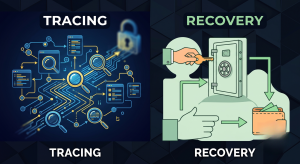
However, irreversible does not mean untraceable.
Every public blockchain permanently records transaction history. Skilled investigators can reconstruct how stolen funds moved between wallets, identify laundering patterns, monitor transfers across multiple blockchains, and determine whether assets eventually reached centralized exchanges or other identifiable services.
Whether recovery is possible depends heavily on several factors:
-
How quickly the theft is reported
-
The specific blockchain network involved
-
The sophistication and laundering techniques of the criminals
-
Whether the assets eventually entered regulated custodial services (like major exchanges)
-
The quality of available digital evidence
Professional investigators never promise guaranteed recovery because every case presents unique technical and legal hurdles.
Recovery Is Not the Same as “Getting Your Money Back”
Many people misunderstand what legitimate crypto recovery actually means. A genuine recovery investigation is an evidence-gathering process. It usually includes:
-
Blockchain transaction tracing
-
Wallet attribution research
-
Identification of laundering techniques (e.g., mixers, chain-hopping)
-
Timeline reconstruction
-
Evidence preservation
-
Technical reporting
-
Intelligence gathering
-
Coordination with legal professionals and law enforcement
Actual asset retrieval getting your money back may occur only if identifiable entities holding the assets (such as a centralized exchange) are able and legally authorized to freeze and return the funds. Unethical operators intentionally blur these lines, advertising guaranteed cash returns regardless of the circumstances.
What a Legitimate Crypto Recovery Service Actually Does

Professional crypto investigators approach every case methodically, relying on data rather than emotion.
The process typically begins with collecting hard evidence: transaction hashes, wallet addresses, exchange records, communication logs, screenshots, emails, and smart contracts. Next comes blockchain analysis. Investigators follow the movement of digital assets across multiple wallets, identifying transaction clusters, recurring addresses, exchange deposits, bridge activity, decentralized finance (DeFi) interactions, token swaps, and mixers.
The objective is not to “hack” the criminal. Instead, investigators build an evidence-based picture of where the assets traveled and who may ultimately control them. This actionable intelligence becomes vital for attorneys, exchanges, insurers, or law enforcement agencies.
10 Signs You’re Dealing With a Legitimate Crypto Recovery Firm
-
They Never Guarantee Recovery: Absolute guarantees are a marketing gimmick, not a factual investigation. No investigator can promise success before reviewing the evidence.
-
They Explain Their Methodology: Professionals describe their process in clear, understandable language without claiming access to “secret government databases” or “magical hacking tools.”
-
They Set Realistic Expectations: Every investigation has limitations. Legitimate firms will explain both the possibilities and the obstacles instead of promising miracles.
-
They Request Hard Evidence: Expect requests for wallet addresses, transaction IDs, chat logs, and exchange records. Evidence drives real investigations.
-
They Communicate Clearly: Professional investigators answer questions honestly and translate technical blockchain findings into plain English.
-
They Have Verifiable Experience: Look for identifiable professionals with established investigative backgrounds, published educational content, or documented expertise in digital forensics.
-
They Produce Professional Reports: The final deliverable should be a comprehensive document including timelines, visual flow diagrams, and wallet relationships not just a few basic screenshots.
-
They Respect Legal Boundaries: Professional investigators never propose illegal activities. Claims about “hacking wallets,” breaking encryption, or “unlocking” private keys are major red flags.
-
They Discuss Probability, Not Certainty: Ethical investigators explain the likelihood of success based on the data available. They do not manufacture false hope.
-
They Operate Transparently: Clear contact information, professional communication, defined engagement terms, and transparent pricing are non-negotiable markers of credibility.
Questions You Should Ask Before Hiring Anyone
Before committing to a recovery service, protect yourself by asking thoughtful, direct questions:
-
What specific investigative methods and blockchain tools will you use?
-
Have you successfully handled cases similar to mine?
-
What deliverables (e.g., reports, diagrams) should I expect at the end?
-
What happens if the tracing reaches multiple blockchains or privacy coins?
-
How frequently will I receive updates on the case?
-
Can you explain your preliminary findings to me in plain English?
-
How long does an investigation like this usually take?
-
What specific factors could limit the success of this investigation?
A legitimate professional welcomes informed questions; a scammer will avoid them or respond with aggression.
Warning Signs of a Crypto Recovery Scam
Victims of cryptocurrency theft are highly vulnerable to emotional decision-making, and scammers frequently exploit this urgency to secure fast payments. Walk away immediately if a company or individual:
-
Guarantees recovery or claims impossible success rates (e.g., “99% successful”).
-
Pressures you into immediate, urgent payment.
-
Contacts you unsolicited on social media (Reddit, X, Instagram) after you post about your loss.
-
Refuses to explain their methods or relies on “insider connections.”
-
Asks for your wallet seed phrases, private keys, or login credentials.
-
Promises to “hack” the thief to get your money back.
-
Continually requests additional fees (e.g., “server fees,” “bribe money”) without showing any progress.
Why Timing Matters in Crypto Tracing
The first hours and days following a theft are often critical. Delays allow criminals to increase investigative complexity by moving assets repeatedly, exchanging tokens, bridging funds across chains, and distributing assets among hundreds of wallets.
Preserve all available evidence immediately. Strong documentation is the foundation of any subsequent investigation:
-
Transaction hashes (TxIDs)
-
Wallet addresses (both yours and the scammer’s)
-
Account statements
-
Full communication history (messages, emails, social media chats)
-
Screenshots of the fraudulent platform
-
Payment confirmations
How to Protect Yourself from Secondary Scams
After reporting a cryptocurrency theft online, you will likely be flooded with messages from individuals claiming they can recover your funds for an upfront fee. These “recovery brokers” rely on emotional manipulation. Protect yourself by:
-
Independently researching every company outside of social media.
-
Verifying professional credentials and business registrations.
-
Reading balanced client feedback on trusted, third-party review sites.
-
Requesting written engagement terms before paying a dime.
-
Never sharing your private keys or recovery phrases with anyone.
Choosing the Right Blockchain Investigative Partner

Selecting a crypto recovery service should resemble hiring any other legal or investigative professional. Look for transparency, technical competence, realistic communication, and a highly structured investigative process.
Firms like Cyberspac3 focus strictly on blockchain investigations and cryptocurrency tracing rather than making unrealistic promises. By emphasizing rigorous evidence collection, transaction analysis, and professional reporting, they help clients understand exactly what happened to their assets and outline realistic legal options. Credibility comes from methodology, not marketing.
Final Thoughts
Cryptocurrency investigations demand technical expertise, patience, and disciplined analysis. While blockchain technology makes transactions permanent, it also creates an enduring digital footprint that skilled investigators can examine to reconstruct the movement of stolen assets.
Finding a legitimate crypto recovery service is not about finding a wizard who promises extraordinary results. It is about identifying professionals who communicate honestly, work transparently, and base every conclusion on verifiable on-chain evidence. If a company guarantees success, claims it can hack wallets, or pressures you for immediate payment, close the tab.
For victims, the most valuable asset after a loss is reliable information. A thorough investigation provides clarity, preserves vital evidence, and significantly improves the chances of holding fraudsters accountable.