

How Long Does Crypto Recovery Take? | Realistic Timeline
By Steven Burton – Trusted Private Investigator
Wondering how long crypto recovery takes? Discover the realistic timeline from blockchain investigation to legal resolution, and learn how to spot scams. When cryptocurrency disappears, time suddenly feels very different. Victims often spend the first few hours refreshing blockchain explorers, contacting exchanges, and searching online for someone who can recover their digital assets. During that search, they’re bombarded with conflicting claims. Some websites promise recovery within 24 hours, while others say it could take years.

So, how long does stolen cryptocurrency recovery actually take?
The honest answer is that every case is different. Crypto asset recovery is not a single process but a series of investigations, technical analyses, legal considerations, and negotiations with cryptocurrency exchanges or service providers. Some cases can reach a conclusion within days, while others require several months of persistent work.
Understanding what happens behind the scenes helps set realistic expectations and protects victims from falling for recovery scams that rely on false urgency and impossible guarantees.
Key Takeaways
-
Speed matters: The first 24 hours are critical for preserving digital evidence and tracking funds before they disperse.
-
No guaranteed timelines: Legitimate cryptocurrency forensic investigations can take anywhere from a few days to over a year, depending on the case’s complexity.
-
Beware of scammers: Anyone promising “guaranteed” 24-hour recovery without reviewing your evidence is likely running a secondary scam.
-
Legal vs. Technical: Tracing the blockchain is only half the battle; recovering funds often requires legal proceedings and exchange cooperation.
There Is No Universal Crypto Recovery Timeline
One of the biggest misconceptions about crypto recovery is that there should be a standard timeframe. Unlike a traditional bank transfer, cryptocurrency transactions settle almost instantly and are generally irreversible on the blockchain. Once funds leave a wallet, recovering them depends on several high-impact variables:
-
Where the funds were sent: Are they in a private, self-hosted wallet or a regulated exchange?
-
The destination’s nature: Does the receiving wallet belong to an identifiable Virtual Asset Service Provider (VASP)?
-
Speed of action: How quickly the victim reports the theft and engages professionals.
-
Laundering complexity: The use of crypto mixers, privacy coins, or cross-chain bridges.
-
Evidence quality: The availability of transaction hashes, chat logs, and URLs.
These factors can dramatically shorten or significantly extend the cryptocurrency tracing process.
The Four Stages of Cryptocurrency Investigation

Stage One: The First 24 Hours (Evidence Collection)
The first day after discovering the theft is often the most important. This is when valuable evidence is still fresh, communication records remain available, and stolen cryptocurrency may not yet have been dispersed across dozens or hundreds of wallets.
During this stage, investigators typically begin by collecting:
-
Wallet addresses and transaction hashes (TXIDs)
-
Exchange records and account statements
-
Screenshots, chat conversations, and email correspondence
-
Investment platform details and website information
-
Device logs (where available)
Victims who preserve evidence immediately give investigators a much stronger starting point. This initial evidence collection can usually be completed within one or two days.
Stage Two: Blockchain Forensic Investigation
Once the evidence has been assembled, investigators begin tracing the movement of funds. Contrary to popular belief, cryptocurrency does not simply disappear. Every transaction creates a permanent public record. The challenge lies in interpreting those records and following the money across multiple wallets, decentralized finance (DeFi) services, bridges, and exchanges.

This investigative phase often includes:
-
Transaction mapping and wallet clustering
-
Address attribution and pattern analysis
-
Timeline reconstruction
-
Identifying potential service providers
Simple cases involving only a handful of transactions may be analyzed within a few days. Complex fraud operations involving hundreds or thousands of transactions can require several weeks before investigators build a complete picture.
Stage Three: Identifying Recovery Opportunities
Tracing cryptocurrency is only part of the process. The next objective is determining whether recovery is realistically possible. Investigators evaluate questions such as:

-
Have the funds reached a centralized, regulated exchange (like Binance or Coinbase)?
-
Are the assets still moving, or have they been cashed out?
-
Were multiple blockchain bridges used to obscure the trail?
-
Are identifiable individuals connected to the wallets?
Not every traced transaction leads to a practical recovery opportunity. This evaluation usually takes several additional days after the blockchain analysis is complete.
Stage Four: Exchange Cooperation & Legal Action
Many stolen assets eventually pass through centralized cryptocurrency exchanges. When investigators identify deposits into these services, depending on the circumstances, exchanges may review account activity, KYC (Know Your Customer) identity records, and Suspicious Activity Reports (SARs).
Response times vary widely. Some exchanges acknowledge requests within days, while others require several weeks before completing their internal review.
Furthermore, some cases transition into civil litigation or law enforcement proceedings. This becomes necessary when assets are frozen by exchanges and court orders are required to release them back to the victim. Legal timelines are significantly longer than technical investigations often extending from several months to well over a year.
Typical Timelines by Fraud Type
Although every investigation differs, certain patterns emerge across common cryptocurrency fraud cases:

| Case Type | Expected Timeline | Key Factors & Delays |
| Lost Wallet Access | Days to Weeks | Depends on available clues (partial passwords, incomplete seed phrases). |
| Exchange Compromise | Days to Weeks | Relies heavily on the specific exchange’s internal security and response speed. |
| Investment Scams | Weeks to Months | Funds often move through multiple wallets; thorough tracing is required. |
| Pig Butchering Scams | Months to 1+ Year | Highly organized syndicates use advanced cross-chain bridging and international infrastructure. |
| Business Payment Fraud | Time-Sensitive | Fast action is critical. If reported immediately, assets may be frozen before dispersal. |
What Causes Delays in Tracing Stolen Crypto?
Several factors commonly extend crypto recovery investigations:
-
Multiple Blockchain Networks: Modern fraud schemes rarely remain on one blockchain. Assets may move from Bitcoin to Ethereum, then through bridges into other ecosystems. Each network increases complexity.
-
Mixing Services: Criminals often use mixers to obscure transaction histories by splitting funds. While tracing is still possible, it significantly increases the analytical workload.
-
International Jurisdictions: Different countries maintain different compliance requirements. Obtaining legal cooperation across borders naturally requires more time.
-
Incomplete Documentation: Missing evidence is a primary bottleneck. Well-organized documentation significantly reduces investigative delays.
Red Flags: Beware of Unrealistic Promises

The urgency surrounding stolen cryptocurrency makes victims especially vulnerable to secondary recovery scams. Be highly cautious of anyone claiming they can:
-
Recover all funds within 24 hours.
-
Guarantee a 100% success rate.
-
Reverse or “chargeback” blockchain transactions (which is technically impossible).
-
“Hack” the scammer’s wallets to retrieve your assets.
-
Recover your crypto without first reviewing your transaction hashes and evidence.
Legitimate investigators begin by evaluating the available facts before discussing timelines or outcomes.
How You Can Speed Up the Process
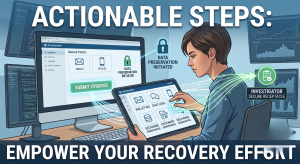
While no one can guarantee a fast recovery, victims can improve the efficiency of an investigation by acting decisively:
-
Preserve all records: Save wallet addresses, transaction IDs, and download account statements.
-
Document communications: Record all chats and emails with the scammers.
-
Stop paying: Avoid making further payments to supposed recovery agents or “tax” authorities.
-
Seek professional help early: Early action gives investigators the best chance to identify transaction paths before they become too complex.
What Success Really Looks Like
Many people assume crypto recovery only counts as successful if every coin is returned. Professional investigators view success more broadly. A successful investigation may involve:
-
Accurately identifying the movement of stolen assets.
-
Attributing wallets to known, regulated services.
-
Preserving rock-solid evidence for civil litigation or law enforcement.
-
Locating assets that remain legally recoverable.
Each milestone strengthens the overall recovery effort, even if the final outcome takes time.
Choosing the Right Recovery Partner
Not every company advertising crypto recovery offers genuine investigative expertise. Before hiring anyone, ask practical questions:
-
What specific investigative methods and software do you use?
-
How do you evaluate a case before accepting it?
-
Will I receive a realistic assessment rather than guaranteed results?
-
How will progress be communicated?
Reputable professionals explain both the possibilities and the limitations of blockchain forensics. For example, firms such as Cyberspac3 emphasize thorough case assessment, meticulous blockchain tracing, evidence preservation, and clear communication about what is and is not achievable. This measured approach is a much stronger indicator of professionalism than marketing claims of overnight success.
Final Thoughts
So, how long does crypto recovery take? It depends on the complexity of the fraud, the speed of your initial response, and the cooperation available from exchanges and legal authorities. Some investigations produce actionable findings within days, while others require weeks of analysis or months of legal follow-up.
The timeline is rarely predictable at the outset. What remains constant is the value of acting quickly, preserving evidence, and working with professionals who provide honest assessments rather than guarantees. Crypto recovery is a process built on precise investigation, documentation, and persistence not shortcuts.