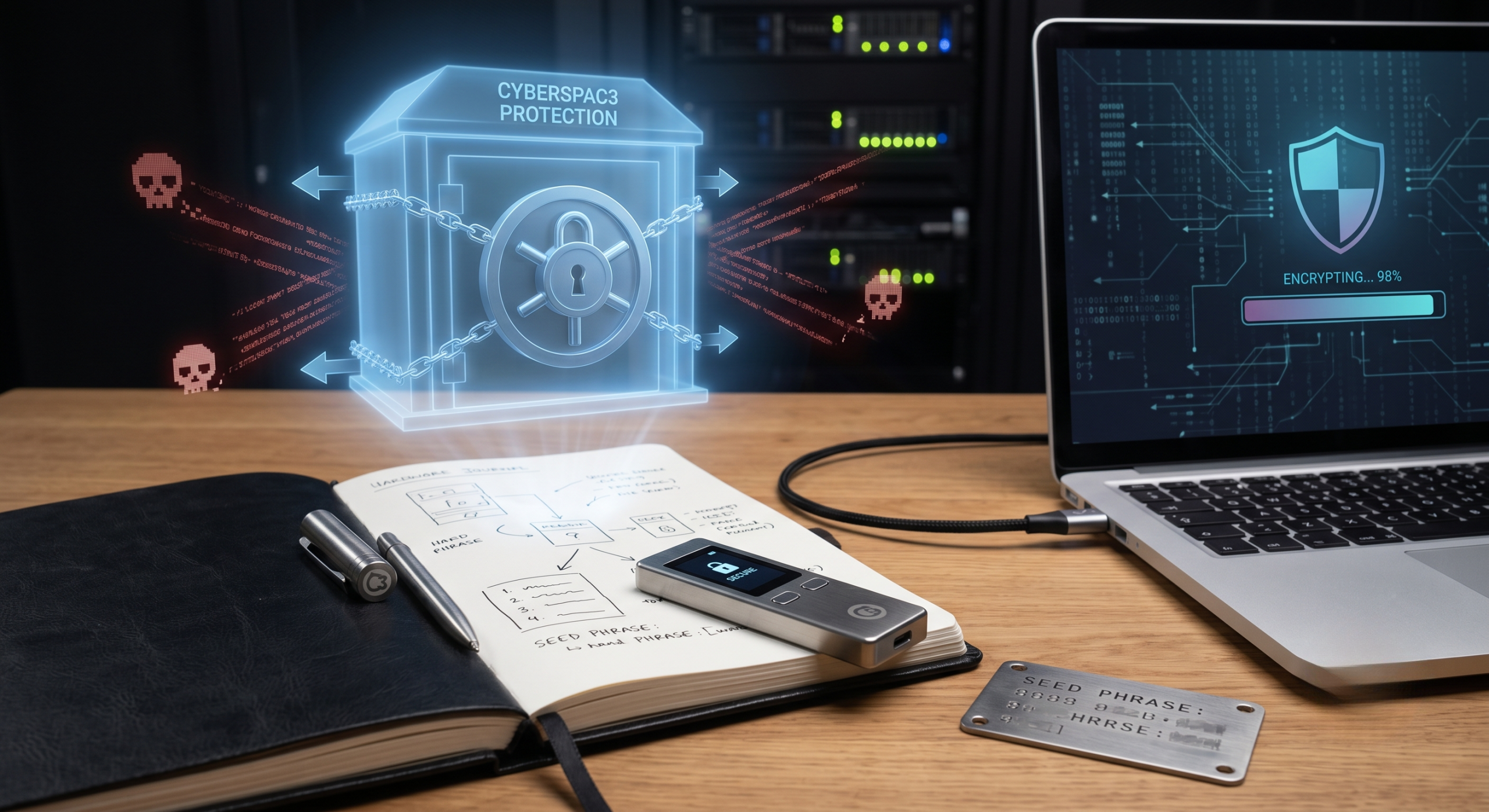
How to Secure Your Cryptocurrency Assets from Hackers: The Ultimate Guide
Has your cryptocurrency assets been hacked?In the past year alone, cybercriminals have siphoned billions of dollars from cryptocurrency investors, leaving a trail of emptied wallets and shattered financial dreams. It is a harsh reality of the decentralized web: in the blockchain world, you are your own bank. There is no customer service hotline to reverse a fraudulent transaction, and there is no FDIC insurance to make you whole after a breach. Once your digital assets are gone, they are almost impossible to recover.
It is completely natural to feel anxious about the security of your crypto portfolio given these high stakes. However, fear shouldn’t keep you from participating in the future of finance. You just need a solid, actionable plan. This comprehensive guide serves as your foolproof, step-by-step roadmap to locking down your digital wealth. Welcome to Cyberspac3, your trusted navigator in the digital frontier. We are here to cut through the jargon and equip you with the practical knowledge you need to defend your assets against even the most sophisticated hackers.
Understanding the Cryptocurrency Threat Landscape
Before you can build an impenetrable fortress, you need to understand the enemies at the gates. Cryptocurrency is a highly lucrative target for cybercriminals for three primary reasons: the relative anonymity of blockchain transactions, the lack of central regulatory bodies to halt suspicious activity, and the high liquidity of digital assets that can be cashed out in minutes. Hackers are not just targeting multi-million dollar exchanges; they are actively hunting individual investors who leave the door cracked open.
The Most Common Attack Vectors
To protect your portfolio, you must recognize how attackers operate. The modern crypto hacker rarely relies on brute force; instead, they exploit human error and systemic vulnerabilities.
- Phishing Campaigns: This remains the most common way investors lose their crypto. Attackers create pixel-perfect clones of popular exchanges, wallet interfaces, or decentralized finance (DeFi) platforms. They use spoofed emails, fake Google Ads, or compromised social media accounts to direct you to these fraudulent sites. Once you connect your wallet or enter your login credentials, the attackers drain your funds instantly.
- SIM Swapping: A terrifyingly effective attack where a hacker manipulates or bribes your mobile carrier into transferring your phone number to a SIM card they control. Once they hijack your number, they can intercept SMS-based two-factor authentication (2FA) codes, reset the passwords to your email and centralized exchange accounts, and lock you out entirely while they empty your balances.
- Malicious Smart Contracts: The Web3 ecosystem is built on smart contracts, but interacting with them carries risk. When you connect your wallet to an untrusted decentralized application (dApp) to mint an NFT or swap tokens, you are often asked to sign a transaction granting the contract permission to spend your tokens. If the dApp is malicious, that single signature can grant the attacker unlimited access to drain that specific asset from your wallet.
- Dusting Attacks: Hackers will sometimes send “dust” microscopic amounts of cryptocurrency to thousands of random wallets. If you attempt to move or consolidate this mysterious dust, you inadvertently link your various wallet addresses together. Hackers use this to unmask your privacy, track your holdings, and target you for highly personalized phishing attacks or extortion.
The Foundation of Security: Choosing the Right Wallet
The first and most critical step in securing your cryptocurrency is understanding where and how it is stored. It is vital to grasp the difference between a public key and a private key. Think of your public key as your bank account number it is safe to share so others can send you funds. Your private key, however, is your ATM PIN and your signature combined. Whoever holds the private key controls the funds. This brings us to the golden rule of cryptocurrency: “Not your keys, not your crypto.”
Hot Wallets (Convenience vs. Risk)
A hot wallet is any cryptocurrency wallet that is connected to the internet. This category includes browser extensions like MetaMask, mobile apps like Trust Wallet, and the built-in wallets on centralized exchanges like Binance or Coinbase.
Hot wallets are incredibly convenient. They allow you to trade, stake, and interact with the Web3 ecosystem instantly. However, this constant internet connectivity is their Achilles’ heel. Because they are always online, they are inherently vulnerable to malware, keyloggers, and remote hacking attempts. Furthermore, leaving funds on a centralized exchange means you are trusting a third-party corporation with your private keys. If the exchange goes bankrupt or suffers a catastrophic breach, your funds are at their mercy.
Best Use Case: Hot wallets should be treated like a physical leather wallet you carry in your pocket. You wouldn’t walk around with your entire life savings in your pocket. Keep only small amounts of crypto in hot wallets for day-to-day trading, purchasing NFTs, or interacting with dApps.
Cold Storage (The Gold Standard of Defense)
If hot wallets are your pocket wallet, cold storage is your impenetrable bank vault. Cold storage refers to physical devices that store your private keys entirely offline, completely disconnected from the internet.
Hardware wallets, such as those produced by Ledger, Trezor, or Coldcard, are the premier examples of cold storage. When you want to make a transaction, you plug the hardware wallet into your computer or connect it via Bluetooth. The device signs the transaction internally, within its secure microchip, and then broadcasts the authorized transaction to the blockchain. Your private keys never touch your computer, your phone, or the internet. Even if your computer is riddled with malware, the hacker cannot extract your keys from the hardware device.
Best Use Case: Hardware wallets are mandatory for securing the bulk of your cryptocurrency portfolio long-term. Any assets you do not plan to trade immediately should be locked away in cold storage.
Paper Wallets
A paper wallet is a form of cold storage where your public and private keys are printed out on a physical piece of paper, often in the form of QR codes. While they are completely air-gapped from the internet, paper wallets are largely considered obsolete in 2026. They are highly susceptible to physical degradation, fire, and water damage. Furthermore, generating and printing them securely is difficult; malicious wallet generators can steal your keys, and modern internet-connected printers often store cached images of printed documents, creating a hidden vulnerability. Stick to reputable hardware wallets.
Advanced Protective Measures for Your Crypto Assets
Owning a hardware wallet is an excellent start, but security is an active process, not a one-time purchase. To truly harden your defenses against modern cyber threats, you must implement advanced protective measures.
Mastering Seed Phrase Management
When you set up any non-custodial wallet, you are given a 12- or 24-word “seed phrase” (also known as a recovery phrase). This string of words is the master cryptographic key to your entire wallet. If your hardware wallet is destroyed, lost, or stolen, you can enter those words into a new device and recover all your funds. Conversely, if a hacker gets those words, they can clone your wallet and take everything.
The Crucial Rule of Seed Phrases: Never, under any circumstances, digitize your seed phrase.
- Do not take a photo of it.
- Do not save it in Apple Notes, Google Drive, or Dropbox.
- Do not email it to yourself.
- Do not type it into any app or website claiming you need to “verify” or “sync” your wallet.
Your seed phrase must live exclusively in the physical world. While writing it on the paper card provided by your wallet manufacturer is fine for the short term, paper is fragile. For true security, invest in a physical metal backup. Products like Cryptosteel or Billfodl allow you to stamp or slide metal letter tiles into a titanium or steel plate, ensuring your seed phrase survives house fires, floods, and the test of time. Store this physical backup in a highly secure location, such as a bank safety deposit box or a hidden, fireproof home safe.
The Power of Multi-Signature (Multi-Sig) Wallets
For those securing life-changing amounts of wealth, relying on a single seed phrase or a single hardware wallet represents a single point of failure. Multi-signature (Multi-Sig) wallets solve this by requiring multiple approvals to authorize a transaction.
Think of it like a nuclear launch sequence that requires two different people to turn their keys simultaneously. A common setup is a “2-of-3” Multi-Sig wallet (using platforms like Safe, formerly Gnosis Safe). In this scenario, three separate private keys are generated, and any transaction requires at least two of them to be signed. You could keep one key on a Ledger device at home, one on a Trezor device in a bank vault, and give the third to a trusted family member or lawyer. If a hacker manages to compromise one of your hardware wallets or finds one of your seed phrases, they still cannot steal your funds because they lack the required second signature.
Upgrading Your Two-Factor Authentication (2FA)
If you must use centralized exchanges (like Coinbase or Kraken) as on-ramps to buy your crypto, your account login is a prime target. Passwords are no longer enough. You must enable Two-Factor Authentication (2FA), but not all 2FA is created equal.
As discussed earlier, SMS-based 2FA is highly vulnerable to SIM swapping and should be considered obsolete and dangerous. You must upgrade your 2FA immediately.
- Authenticator Apps: Use apps like Google Authenticator or Authy. These generate time-based, one-time passwords locally on your device, making them immune to SIM swapping.
- Hardware Security Keys: For the absolute highest level of exchange account protection, use a physical security key like a YubiKey. These require you to physically tap a USB device to log into your account, effectively neutralizing almost all remote phishing and credential-stuffing attacks.
Day-to-Day Operational Security (OpSec) Best Practices
Even the best hardware in the world cannot protect you if your daily habits are reckless. Operational Security (OpSec) is the practice of protecting sensitive information in your day-to-day life. In crypto, good OpSec is just as important as a good hardware wallet.
Using Dedicated Hardware and Networks
Your environment dictates your security. Logging into your crypto exchange or accessing your hot wallet while sipping a latte on a public coffee shop Wi-Fi network is a recipe for disaster. Public networks are frequently monitored by malicious actors looking to intercept unencrypted data. If you must transact in public, always use a highly reputable Virtual Private Network (VPN) to encrypt your traffic.
For maximum OpSec, consider compartmentalization. Use a dedicated, clean laptop or a secondary smartphone strictly for crypto transactions. Do not use this dedicated device for downloading torrents, browsing social media, or checking your daily email. By isolating your crypto activities, you drastically reduce the risk of accidentally downloading malware that could compromise your assets.
Practicing Digital Hygiene
Digital hygiene requires ongoing vigilance and routine maintenance.
- Revoke Smart Contract Allowances: If you interact with DeFi platforms, you have likely granted smart contracts permission to access your tokens. Use tools like Revoke.cash on a regular basis to review and revoke unnecessary permissions. If a dApp you used a year ago gets hacked today, your funds could still be at risk if you never revoked its allowance.
- Verify URLs Manually: Never click on Google Ads for crypto exchanges or wallets, as hackers frequently buy ad space to promote sophisticated phishing sites that look identical to the real thing. Always type the URL manually, bookmark the official sites, and double-check the spelling.
- Keep Software Updated: Hackers exploit known vulnerabilities in outdated software. Keep your computer’s operating system, your browser, and your hardware wallet’s firmware updated to the latest versions to ensure you have the newest security patches.
The “Test Transaction” Method
The blockchain does not have an “undo” button. If you send funds to the wrong address, or send the wrong token on the wrong network, those assets are gone forever.
To mitigate this risk, always employ the “Test Transaction” method. Before transferring a large sum of cryptocurrency, send a tiny, negligible test amount first. Wait for the transaction to clear and verify that the test funds arrived safely in the intended destination wallet. Only after confirming the path is clear and correct should you send the remaining bulk of your funds. The small network fee you pay for the test transaction is a cheap insurance policy against total loss.
Emergency Protocols: What to Do If You Suspect a Breach
Despite your best efforts, if you ever suspect that your wallet or exchange account has been compromised, you must act with ruthless efficiency. During a breach, speed is the only factor that matters. Panic will cost you; decisive action might save you.
- Step 1: Disconnect Immediately. If you suspect your hot wallet or computer is compromised, disconnect the device from the internet immediately (turn off Wi-Fi or unplug the ethernet cable). This will stop any automated, remote-draining scripts in their tracks.
- Step 2: Evacuate Remaining Funds. If you still have access to your funds via a secure, uncompromised device (like your phone), immediately transfer any remaining assets to a freshly generated, secure wallet. Do not transfer them back to an older wallet that might also be compromised.
- Step 3: Revoke Permissions. If you suspect a malicious smart contract is draining you, use an uncompromised device to connect to a revocation tool and instantly revoke all dApp permissions.
- Step 4: Lock Down Centralized Accounts. If you believe your passwords or API keys were leaked, contact your exchange’s support team immediately to freeze your accounts and halt all withdrawals.
Conclusion
Securing your cryptocurrency assets does not require a degree in computer science, but it does demand a shift in mindset. True crypto security is a deliberate blend of utilizing the right hardware anchored by cold storage and cultivating the right daily habits through strict OpSec and robust 2FA.
We know the threat landscape sounds intimidating, but taking control of your financial sovereignty is incredibly empowering. Security shouldn’t cause paranoia; when implemented correctly, it should provide you with profound peace of mind. You have the tools and the knowledge to protect what is yours. We encourage you to share this guide to help protect the broader crypto community from malicious actors. For more deep-dive cybersecurity guides, or to stay ahead of the latest Web3 threats, explore the rest of Cyberspac3 and subscribe to our weekly security newsletter. Stay safe, and stay vigilant.