Hire a Hacker to Catch a Cheating Spouse: What You Must Know
By Steven Burton — Trusted Private Investigator
Thinking of honest ways to hire a hacker to catch a cheating spouse? Learn the risks, avoid scams, and discover why a digital forensics expert or PI is the safer choice. If you are searching for a way to hire a hacker to catch a cheating spouse, you are likely dealing with uncertainty, suspicion, and a lot of difficult questions. You may have noticed unexplained behavior, secretive phone use, unusual travel, hidden messages, or abrupt changes in your spouse’s routine. Naturally, you might be wondering whether hiring a professional can help you finally discover the truth.
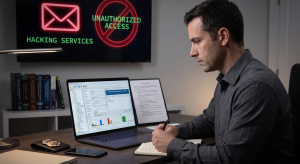
However, there is a crucial distinction you need to understand: the difference between hiring a licensed professional to conduct a lawful digital investigation and hiring an anonymous person online who promises to break into a phone, email account, or private messages.
Unauthorized access can create serious legal and privacy problems. It also exposes you to scammers who take your money, steal your identity, or make entirely unrealistic promises. A legitimate professional investigation focuses on lawful evidence gathering, digital forensics, surveillance where permitted, and documented findings.
Here is everything you need to know before you hire anyone.
Can You Actually Hire a Hacker to Catch a Cheating Spouse?
Technically, many websites and online advertisements claim to offer hacking services for suspected infidelity. However, consumers must be extremely careful with anyone promising “guaranteed” secret access to another person’s phone or online accounts.
A professional ethical hacker or digital-forensics specialist does not simply break into someone’s device just because a client suspects cheating.
Instead, legitimate professionals work within an agreed scope and strict applicable laws. Depending on the circumstances, their work may involve:
-
Examining devices that the client legally owns.
-
Analyzing legally obtained digital evidence.
-
Preserving existing evidence before it is deleted.
-
Helping an investigator understand digital activity.
If someone tells you they can secretly access your spouse’s Gmail, WhatsApp, iCloud, Facebook, Instagram, or phone without authorization, treat that promise as a major red flag. The objective is to determine whether there is credible evidence of infidelity while protecting yourself from illegal activity and fraudulent service providers.
What Can an Ethical Digital Investigator Actually Do?
The term “hacker” is used loosely online. A legitimate cybersecurity or digital-forensics professional performs very different work from someone selling illegal, unauthorized account access.
1. Digital Forensics
Digital forensics involves examining digital information in a structured manner and documenting the findings. When a professional has lawful access to a device, they can identify relevant files, communications, timestamps, application activity, and other digital artifacts. The goal is to preserve and analyze information, not manipulate it.
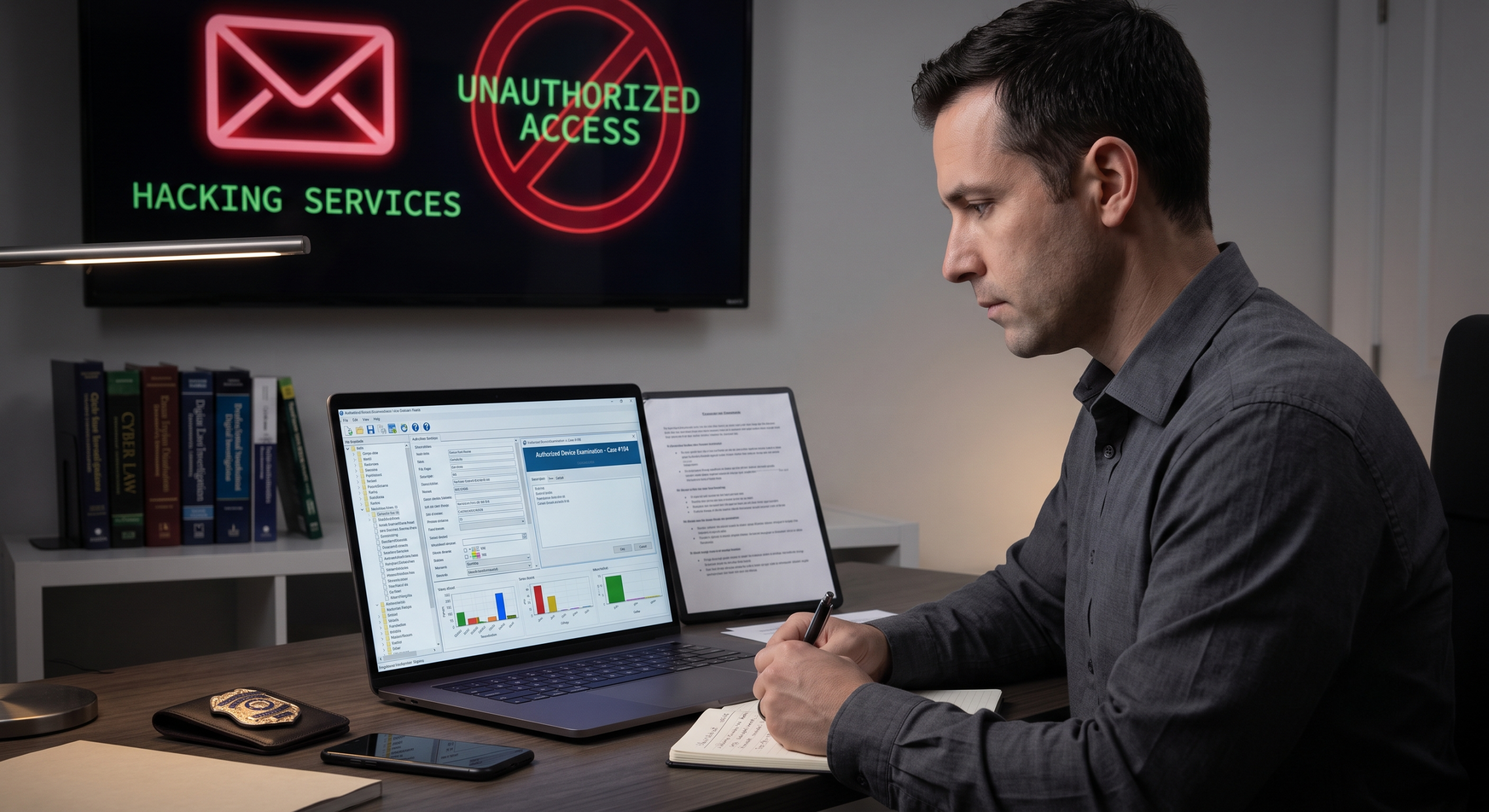
2. Authorized Device Examination
If you legally own a device or have the appropriate authorization to provide it for examination, a digital-forensics specialist can analyze the information stored on it. This is completely different from secretly breaking into somebody else’s phone.
3. Digital Evidence Preservation
Evidence can vanish through deletion, automatic cloud synchronization, device replacement, or just ordinary use. A qualified professional knows how potentially relevant information should be preserved and documented. This is vital if the investigation might eventually become part of a legal dispute (like a divorce).
4. Investigation of Existing Evidence
Sometimes you don’t need anyone to “hack” anything. You may already have photographs, messages sent directly to you, joint financial records, or publicly available social media information. A professional can organize, evaluate, and trace this information so that your conclusions are based on hard evidence rather than assumptions.
Ethical Hacker vs. Private Investigator: Who Should You Hire?
One of the most common questions people ask is whether they should hire a hacker or a private investigator (PI). The answer depends entirely on what you actually need.
The most important question is not, “Who can hack my spouse’s phone?” It is: “Who can lawfully investigate my concerns and provide reliable evidence?”
How to Find a Legitimate Digital Forensics Professional
If you decide to hire an investigator or digital specialist, do not choose someone solely because their website says they can “hack any phone.” Look for these signs of a real, accountable business:
-
Check Their Business Identity: Look for a verifiable business name, professional contact information, a physical address, and a written agreement. Be cautious of anyone communicating exclusively through anonymous messaging apps (like Telegram or WhatsApp) who refuses to identify their legal business.
-
Verify Relevant Credentials: If hiring a PI, check their state or local licensing. If hiring a digital-forensics pro, ask about their education, certifications, and previous case types.
-
Ask for a Written Scope of Work: Before paying a dime, get a document outlining the objective, what devices are involved, expected deliverables, estimated costs, and how findings will be reported.
-
Demand Transparent Pricing: Be suspicious of both extremes. An unusually cheap service is likely a scam, while an expensive service that refuses to explain their fees is equally concerning.
-
Ask How Evidence Will Be Handled: If this leads to a divorce proceeding, evidence must be legally admissible. The professional should clearly explain their chain-of-custody process.
10 Red Flags of a Fake “Hacker-for-Hire” Scam
Searching for a hacker puts vulnerable consumers directly in the crosshairs of fraudsters. Watch out for these 10 warning signs:
-
Guaranteed Results: Nobody can honestly guarantee what evidence an investigation will reveal.
-
“We Can Hack Any Phone”: Universal claims ignore the reality of varying operating systems, encryptions, and security controls.
-
No Written Agreement: Never pay someone who won’t put their service description in writing.
-
Cryptocurrency-Only Payment: Demands for irreversible payments (like Bitcoin) combined with anonymity is a massive red flag.
-
Requests for Your Passwords: Never provide your own passwords, 2FA codes, or recovery phrases to an “investigator.”
-
No Verifiable Identity: If you don’t know their real name, don’t hire them.
-
Pressure to Pay Immediately: Legitimate businesses do not use high-pressure, manipulative sales tactics.
-
Fake Testimonials: Look for independent reviews on third-party sites, not just quotes on their own website.
-
Unrealistic Technical Claims: Be skeptical of claims that they can “instantly recover every deleted message from years ago.”
-
Requests to Install Suspicious Software: Never install remote-access tools or unknown apps on your own computer or phone. You might be giving a scammer access to your bank accounts.
How Much Does a Cheating-Spouse Investigation Cost?
There is no universal price for an infidelity investigation. Costs depend heavily on the case’s complexity. Potential cost factors include:
-
Initial consultation fees
-
Investigator hourly rates
-
Number of surveillance hours and travel expenses
-
Digital-forensics examination (often billed flat-rate per device or hourly)
-
Evidence analysis and written reports
When comparing professionals, do not simply select the cheapest option. Compare the legal safety, the depth of the report, and the credibility of the investigator.
Can Digital Evidence Be Used in Divorce Proceedings?
Potentially, but that does not mean every piece of digital information is automatically admissible in court.
The circumstances under which evidence was obtained matter significantly. Secretly accessing an account without authorization (hacking) can create severe legal liabilities for you, and judges will often throw that evidence out.
If your investigation could affect divorce, child custody, or financial disputes, discuss the situation with a qualified family law attorney in your jurisdiction first. The goal should be to obtain reliable information through lawful methods not to create additional legal problems for yourself.
What You Should Never Give a Hacker
If you are speaking to an online entity, never casually provide:
-
Banking passwords
-
Email passwords or Authentication (2FA) codes
-
Password-manager credentials
-
Cryptocurrency recovery phrases
-
Government identification documents (unless required for a legitimate PI contract)
You are hiring an investigator to gain clarity on a situation. You should never have to sacrifice your own cybersecurity and identity to obtain it.
Frequently Asked Questions (FAQ)
Can I hire a hacker to catch my cheating spouse? While many people claim to offer hacking services online, unauthorized access to another person’s accounts is illegal. A safer, more effective approach is to hire a licensed private investigator or qualified digital-forensics professional who uses lawful investigative options.
Can an ethical hacker investigate infidelity? An ethical hacker focuses on authorized cybersecurity work. A digital-forensics professional can examine information on devices they are legally authorized to access, but they will not illegally break into another person’s private accounts.
Can someone recover deleted text messages? Sometimes. Digital information can often be recovered from an authorized device using forensic tools, but recovery is never 100% guaranteed. It depends on the device, how long ago it was deleted, and whether the data was overwritten.
Is hiring a private investigator better than hiring a hacker? Yes. A private investigator acts within the bounds of the law to conduct surveillance, track public records, and gather admissible evidence. Hiring a hacker online is illegal, puts your personal data at risk, and often results in being scammed.