Hiring an Ethical Hacker for WhatsApp Security Assessments
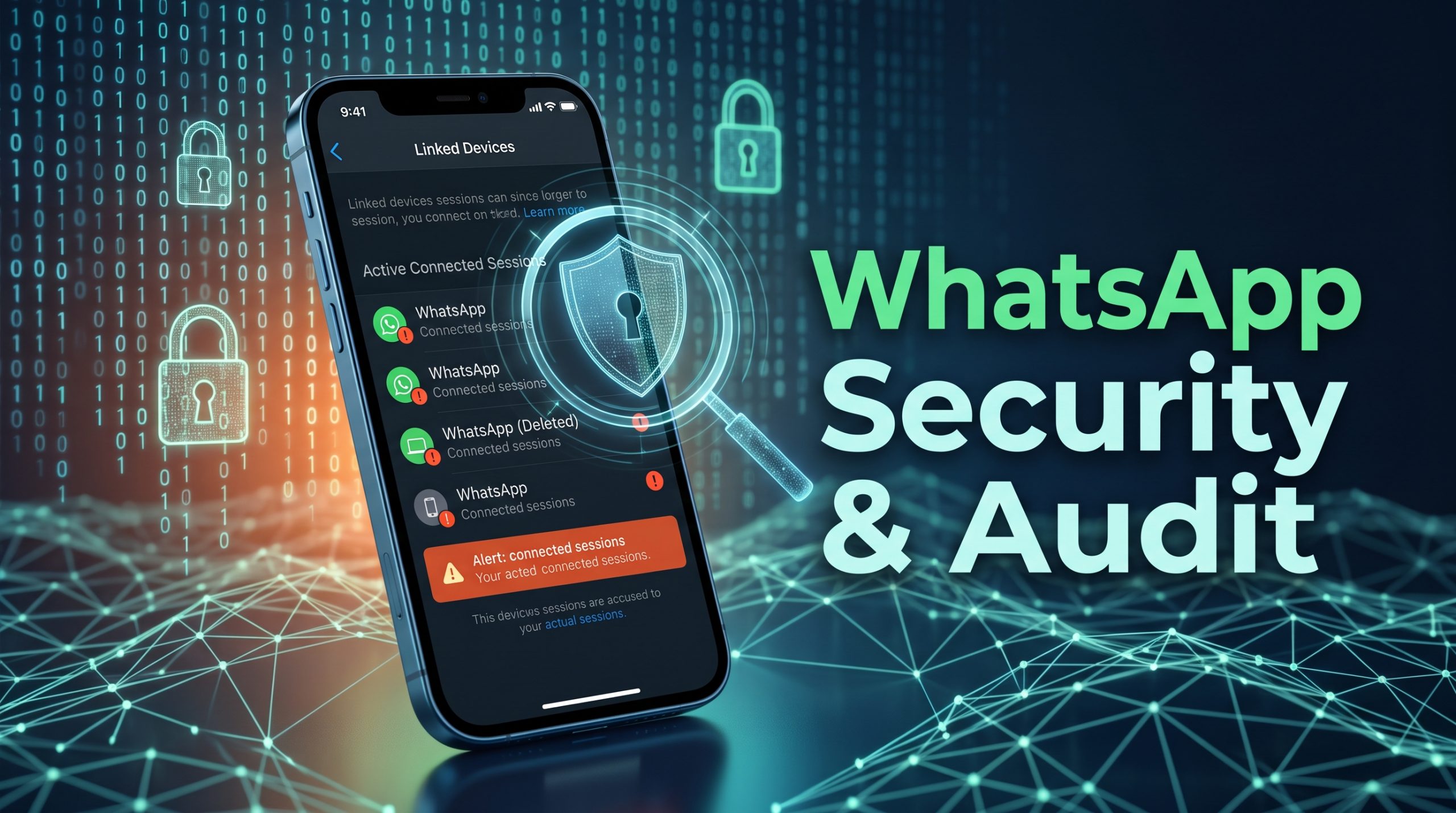
While nearly every WhatsApp user is aware of the “Linked Devices” feature in their settings menu, very few take the time to actually inspect it.
WhatsApp introduced its multi-device architecture so users could seamlessly access their accounts across laptops, tablets, or secondary phones without requiring their primary smartphone to stay connected. A single account can support up to four companion devices simultaneously. Once connected, every linked device receives a complete mirror of all incoming messages and retains the ability to send messages on behalf of the primary account holder. These connections remain active indefinitely operating quietly in the background and syncing independently of the main handset.
Although designed as a legitimate tool for everyday convenience, this exact architecture represents one of the most overlooked vulnerabilities in personal mobile security.
If an unauthorized party gains physical access to an unlocked phone for less than thirty seconds or tricks a user into scanning a malicious QR code through social engineering they can establish a permanent surveillance foothold. That rogue endpoint will capture every incoming message and allow the intruder to impersonate the user in real time. Worse still, the connection stays alive even if the primary phone is powered down, the SIM card is removed, or the owner remains completely oblivious to the breach. No malware or virus is required; it is simply a built-in platform feature weaponized without the owner’s consent.
A comprehensive WhatsApp security audit evaluates this multi-device structure alongside every other critical layer of account protection: end-to-end encryption integrity, two-step verification (2SV) configurations, privacy controls, cloud backup encryption, and the underlying security of the host smartphone. Engaging a certified ethical hacker for WhatsApp security delivers a formal, documented evaluation conducted with the same rigorous methodology used in enterprise-grade penetration testing.
Cyberspac3 deploys certified ethical hackers for comprehensive WhatsApp security audits, forensic data recovery, and mobile threat assessments across the UK, USA, Canada, and Australia.
🔍 1. What Engaging an Ethical Hacker for WhatsApp Security Entails
The Professional Security Audit
Retaining a certified ethical hacker for WhatsApp protection is an owner-authorized engagement where a credentialed cybersecurity specialist evaluates the holistic security posture of a WhatsApp account, its host device, and its surrounding network environment. The specialist pinpoints active vulnerabilities, uncovers forensic evidence of unauthorized access, and delivers actionable remediation protocols.
These engagements are strictly lawful and owner-consented. Digital security evaluations operate under rigorous statutory frameworks, including the UK’s Computer Misuse Act 1990 (https://www.legislation.gov.uk/ukpga/1990/18/contents), the US Computer Fraud and Abuse Act (https://www.justice.gov/jm/9-48000-computer-fraud), and parallel legislation in Canada and Australia. Every owner-authorized assessment conducted by Cyberspac3 complies fully with applicable regional laws.
Cyberspac3 analysts hold globally recognized cybersecurity credentials, including the EC-Council’s Certified Ethical Hacker (CEH) and Certified Hacking Forensics Investigator (CHFI) designations (https://www.eccouncil.org), GIAC certifications in digital forensics and incident response (https://www.giac.org), and OffSec’s Offensive Security Certified Professional (OSCP) qualification (https://www.offsec.com).
Core Components of a WhatsApp Security Audit
A structured WhatsApp security investigation examines eight primary areas:
-
Linked Device Audit: Cataloging every companion device paired with the account and verifying that each endpoint is explicitly recognized and authorized by the owner.
-
Two-Step Verification Review: Auditing the status of 2SV PIN protections and evaluating the security of the linked recovery email address.
-
Privacy Configuration Audit: Reviewing visibility permissions for “Last Seen” timestamps, profile pictures, bio details, status updates, and live location sharing.
-
Cloud Backup Encryption Analysis: Verifying whether chat histories backed up to Apple iCloud or Google Drive are protected by independent end-to-end encryption keys.
-
Account Takeover (ATO) Vulnerability Assessment: Evaluating exposure to and checking for historical signs of SIM swapping, SMS registration interception, and unauthorized re-registration attempts.
-
Host Device Posture Review: Inspecting the operating system and hardware environment running the WhatsApp application to ensure the foundational device is not compromised.
-
Connected Ecosystem Review: Assessing linked social media profiles and secondary messaging apps for lateral security risks.
-
Data Recoverability Assessment: Determining what chat logs or media files can be forensically recovered following device loss, damage, or unauthorized account wiping.
To initiate a formal assessment, visit Cyberspac3.
📱 2. The Linked Device Vulnerability: Silent Account Surveillance
Mechanics of the Multi-Device Architecture
Introduced in 2021, WhatsApp’s multi-device framework allows companion endpoints to sync messages without routing traffic through an active primary smartphone. Meta outlines the cryptographic structure of this system in the official WhatsApp Security Whitepaper (https://www.whatsapp.com/security/WhatsApp-Security-Whitepaper.pdf).
Under this model, every linked companion device generates its own unique end-to-end encryption keys. When a message is sent to the user, WhatsApp’s servers distribute individually encrypted copies to the primary phone and every paired device simultaneously, allowing each endpoint to decrypt the payload locally. While the underlying cryptography is robust, encryption cannot verify human intent the vulnerability lies in whether an unauthorized third party has inserted their own device into that trusted encryption mesh.
Primary Attack Vectors for Unauthorized Linking
Threat actors typically exploit linked device functionality through one of three avenues:
-
Brief Physical Access: An individual with momentary access to an unlocked phone opens a WhatsApp Web session on their own computer or tablet, navigates to the “Linked Devices” menu on the victim’s handset, and scans the pairing QR code. The entire pairing sequence takes less than thirty seconds. Once the phone is locked and set back down, the intruder’s device continuously mirrors all future messages.
-
QR Code Social Engineering (QRLJacking): The attacker tricks the victim into scanning a fraudulent QR code disguised as a promotional offer, contact card, or third-party login portal. In reality, the code contains an active WhatsApp Web pairing token that immediately binds the attacker’s browser session to the victim’s account.
-
MDM Enrollment and Screen Mirroring: If a smartphone is covertly enrolled in a Mobile Device Management (MDM) framework or unauthorized screen-casting utility, an external operator may view WhatsApp communications directly from the display feed.
While WhatsApp does generate a system push notification when a new companion device is paired, an intruder with brief physical access can immediately swipe it away, or a busy user may overlook it entirely. Relying on a single transient alert leaves a significant security gap.
What a Forensic Audit Uncovers
A professional linked-device audit looks deeper than a cursory glance at the settings screen by evaluating:
-
Active Companion Endpoints: Extracting device identifiers, operating system signatures, initial pairing timestamps, and recent activity logs.
-
Dormant Linked Sessions: Identifying paired devices flagged as inactive that still retain valid cryptographic tokens capable of resuming sync operations.
-
Asset Cross-Referencing: Reconciling every connected session against the client’s verified personal hardware inventory to isolate rogue endpoints.
-
Timeline Correlation: Mapping the exact timestamp of an unrecognized device pairing against the client’s real-world schedule to pinpoint when and how physical phone access occurred.
🔒 3. The Broader WhatsApp Threat Landscape
Account Takeover (ATO) Methodologies
SIM Swapping
SIM swapping remains one of the most destructive account takeover vectors because WhatsApp ties account identity directly to a cellular phone number. Whenever WhatsApp is installed on a new phone, the platform dispatches a six-digit verification token via SMS or automated voice call. By socially engineering the victim’s mobile carrier into transferring that phone number to a blank SIM card, an attacker intercepts the registration token and hijacks the account onto their own hardware.
The US Federal Trade Commission (https://www.ftc.gov/consumer-advice/topics/phones/what-do-about-sim-swapping) provides extensive documentation on SIM swap fraud. Because this vector bypasses phone hardware entirely by targeting the telecom provider, professional assessments thoroughly evaluate carrier-level PIN protections alongside WhatsApp’s internal two-step verification controls.
Registration Code Interception
Beyond full SIM swaps, threat actors intercept six-digit registration codes through three primary techniques:
-
SS7 Protocol Exploitation: Signaling System 7 (https://www.itu.int/rec/T-REC-Q.700/), the legacy routing protocol connecting global telecom networks, contains inherent architectural flaws. Sophisticated actors with access to SS7 infrastructure can silently reroute incoming SMS messages to intercept verification tokens in transit.
-
Social Engineering Pretexting: Attackers impersonate WhatsApp administrative support, trusted contacts, or automated verification bots to manipulate the target into voluntarily forwarding their SMS registration code.
-
Voicemail Box Hijacking: If a victim’s cellular voicemail uses a default or weak PIN, an attacker can initiate WhatsApp registration while the victim’s phone is off or occupied on another call. When WhatsApp falls back to delivering the verification code via automated voice call, the message goes straight to voicemail—which the attacker then dials into remotely to retrieve the audio code.
Enabling WhatsApp’s Two-Step Verification neutralizes these interception methods. When 2SV is active, completing registration on a new phone requires a user-defined six-digit PIN in addition to the SMS token. Professional security audits verify that 2SV is properly enforced and that the backup recovery email cannot be compromised to reset that PIN.
Stalkerware and Endpoint Spyware
If spyware or commercial monitoring software is installed directly on the smartphone, end-to-end encryption becomes irrelevant. Device-level stalkerware captures keystrokes, screen buffers, and decrypted application databases directly from the operating system layer. The Coalition Against Stalkerware (https://stopstalkerware.org) tracks hundreds of commercial surveillance tools built specifically to harvest WhatsApp activity. Professional audits include deep endpoint inspections to detect hidden monitoring apps, rogue configuration profiles, and root/jailbreak artifacts.
Application-Layer Exploits
Historically, critical software vulnerabilities within the WhatsApp client itself have allowed remote compromises, underscoring the need for strict patch management:
-
CVE-2019-3568 (Zero-Click VoIP Exploit): In 2019, a severe buffer overflow flaw in WhatsApp’s voice-calling stack (https://nvd.nist.gov/vuln/detail/CVE-2019-3568) allowed commercial spyware to infect targets simply by placing a missed WhatsApp call—requiring zero user interaction. The exploit was extensively documented by researchers at Citizen Lab (https://citizenlab.ca).
-
Ongoing Vulnerability Tracking: The National Vulnerability Database (https://nvd.nist.gov) continuously logs disclosed flaws across mobile messaging clients. Verifying application build versions against known CVE disclosures is a standard baseline check during any formal security review.
WhatsApp Business Security Risks
Organizations utilizing WhatsApp Business (https://business.whatsapp.com) for client communications face expanded attack surfaces that require specialized auditing:
-
API Credential Hygiene: Securing WhatsApp Business API tokens and webhook endpoints against unauthorized third-party integration.
-
Verified Identity Protection: Safeguarding official business verification badges against brand impersonation.
-
Endpoint and Server Hardening: Securing the shared employee devices or cloud servers hosting business messaging sessions.
-
Compliance and Archiving: Ensuring customer chat backups meet industry data retention and encryption mandates.
🌐 4. Key Client Questions on WhatsApp Security
What are the warning signs that my WhatsApp account is being monitored?
While sophisticated surveillance leaves minimal obvious footprints, several technical indicators warrant immediate investigation:
-
Unrecognized Entries in Linked Devices: Open WhatsApp, navigate to Settings/Menu, and select Linked Devices. Any active browser or OS session you do not explicitly recognize indicates unauthorized access.
-
Unread Messages Marked as Read: Messages appearing with read receipts before you have opened them can indicate a companion session viewing chats in real time.
-
Unexplained Battery Drain or Data Spikes: Background stalkerware constantly exfiltrating media and logs consumes noticeable system resources. Auditing per-app cellular data and battery metrics in your phone’s OS settings can reveal abnormal background activity.
-
Unexplained Privacy Setting Alterations: Changes to “Last Seen,” profile visibility, or live location permissions that you did not authorize.
-
Reports of Outgoing Messages You Never Sent: Contacts receiving unfamiliar messages or links from your profile indicates an active session operating from a separate endpoint.
Because surface symptoms cannot prove the scope of a breach, a forensic audit provides definitive answers. Reach out to Cyberspac3 for a verified assessment.
How can I legally hire a hacker to secure my WhatsApp account?
To arrange a lawful security engagement, contact Cyberspac3 directly. Legitimate ethical hacking engagements require the explicit authorization of the account and device owner and are executed strictly within the legal boundaries of the UK, USA, Canada, and Australia. Every engagement produces formal, defensive security documentation.
Does WhatsApp’s end-to-end encryption guarantee my messages stay private?
WhatsApp utilizes the industry-standard Signal Protocol (https://signal.org/docs/), which provides robust cryptographic protection for messages while they travel across the internet. However, transport encryption only protects data in transit it does not protect against:
-
Compromised Handsets: Spyware running on the phone reads messages directly off the screen or local database after decryption occurs.
-
Rogue Linked Devices: Because every paired companion device holds valid decryption keys by design, an unauthorized linked laptop reads encrypted messages just as legitimately as the primary phone.
-
Unencrypted Cloud Backups: By default, chat logs backed up to Apple iCloud or Google Drive are stripped of Signal Protocol protection unless the user manually enables WhatsApp’s End-to-End Encrypted Backups feature (https://faq.whatsapp.com/general/chats/how-to-use-end-to-end-encrypted-backups).
-
Compromised Recipient Devices: Even if your phone is completely secure, an attacker monitoring the person you are messaging can capture the entire conversation from their end.
Can an intruder read my WhatsApp messages without having my phone?
Yes. Remote access typically occurs through three primary mechanisms:
-
Paired Companion Devices: Once linked, a remote computer or tablet continues syncing chats independently of the primary phone’s location or power state.
-
Cloud Backup Harvesting: If an attacker compromises your Apple ID or Google Account credentials, they can download and extract historical WhatsApp backups stored in iCloud or Google Drive.
-
Persistent WhatsApp Web Sessions: Leaving a browser session logged in on a shared or public computer allows continuous access until that session is manually terminated.
I suspect someone is reading my WhatsApp chats—what immediate steps should I take?
If you suspect active unauthorized access, take these five containment steps immediately while arranging a formal forensic review:
-
Purge Linked Devices: Open the Linked Devices menu in WhatsApp and immediately log out of every listed session.
-
Activate Two-Step Verification: Set a strong six-digit 2SV PIN inside WhatsApp Account Settings to block unauthorized SIM-swap re-registrations.
-
Terminate Active Web Sessions: Ensure all browser-based WhatsApp Web instances are fully disconnected.
-
Update Your Carrier Voicemail PIN: Set a complex voicemail password with your mobile operator to prevent automated voice-code harvesting.
-
Lock Down Your Mobile Carrier Account: Contact your telecom provider to enable a port-out freeze and require an in-store passcode for any SIM card changes.
Crucial Warning: Do not perform a factory reset on your smartphone before conducting a professional forensic audit. Wiping the handset destroys vital volatile logs and database artifacts required to prove how the compromise occurred. Contact Cyberspc3 to preserve forensic evidence properly.
How does Two-Step Verification protect a WhatsApp account?
Two-step verification enforces a mandatory six-digit PIN whenever your phone number is registered on a new WhatsApp installation. Even if an attacker successfully executes a SIM swap, exploits SS7 routing, or hijacks your voicemail to steal the SMS registration code, they remain locked out without your custom PIN. Full configuration details are available in WhatsApp’s official documentation (https://faq.whatsapp.com/general/account-and-profile/using-two-step-verification/). A professional security review verifies that 2SV is active and hardens the associated recovery email account so an intruder cannot trigger a PIN reset link.
🛡️ 5. Deep Dive into WhatsApp’s Security Architecture
The Signal Cryptographic Protocol
Developed by Open Whisper Systems (https://signal.org), the Signal Protocol forms the cryptographic backbone of WhatsApp and delivers three core guarantees:
-
Comprehensive End-to-End Encryption: Secures individual chats, group threads, voice calls, video sessions, and media attachments.
-
Perfect Forward Secrecy: Utilizes ephemeral ratcheting keys for every individual message, ensuring that even if a single cryptographic key were ever compromised, historical chat logs remain unreadable.
-
Cryptographic Authentication: Verifies message integrity in transit so packets cannot be silently altered between endpoints.
While the mathematical cryptography detailed in the WhatsApp Security Whitepaper (https://www.whatsapp.com/security/WhatsApp-Security-Whitepaper.pdf) is thoroughly vetted by cryptographers, practical vulnerabilities almost always emerge at the application, cloud backup, and endpoint layers.
Cloud Backup Exposure
Unless manually hardened, automated cloud backups represent the largest gap in WhatsApp’s privacy model:
-
Standard iCloud Backups: Chat histories uploaded via standard iOS iCloud backups (https://support.apple.com/en-gb/HT204082) are governed by Apple’s cloud encryption rather than the Signal Protocol. Anyone who compromises the user’s Apple ID—or obtains a lawful cloud warrant—can access the backup contents.
-
Standard Google Drive Backups: Similarly, default Android backups to Google Drive (https://support.google.com/drive/answer/2423534) sit outside WhatsApp’s end-to-end encryption boundary.
-
End-to-End Encrypted Backups: WhatsApp offers an opt-in security setting that locks cloud backups behind a user-generated password or a unique 64-digit encryption key. Because this feature is disabled by default, verifying and enabling it is a standard step in professional account hardening.
Granular Privacy Controls
WhatsApp provides seven core visibility settings that govern metadata exposure:
-
Last Seen & Online Status: Dictates who can monitor real-time activity and historical connection timestamps.
-
Profile Photo: Restricts access to the account’s display image.
-
About Information: Controls visibility of profile bio text.
-
Status Updates: Manages the audience for 24-hour ephemeral posts.
-
Group Invitation Permissions: Prevents unknown numbers from forcibly adding the user to group threads.
-
Live Location Sharing: Audits active real-time GPS broadcasts across conversations.
-
Voice & Video Call Controls: Allows silencing of incoming calls from unknown numbers to mitigate zero-click VoIP attack vectors and spam reconnaissance.
📲 6. Cross-Platform Social Media & Email Recovery
Facebook Account Recovery
Because Facebook and WhatsApp operate on shared Meta identity infrastructure, a compromised Facebook profile frequently exposes linked phone numbers and business assets. When standard self-service options at the Facebook Help Center (https://www.facebook.com/help/) fail to resolve a lockout, Cyberspac3 provides specialized recovery assistance, addressing:
-
Credential Hijacking: Restoring ownership after an intruder alters login emails, passwords, and MFA authenticators.
-
Automated Policy Lockouts: Navigating identity verification appeals for wrongly disabled profiles.
-
Meta Business Manager Restoration: Recovering administrative control over commercial ad accounts and corporate pages.
-
Downstream SSO Recovery: Restoring access to third-party platforms authenticated via “Login with Facebook.“
Instagram Account Recovery
High-profile and commercial Instagram accounts face relentless credential-stuffing and phishing attacks. Cyberspac3 delivers dedicated Instagram restoration services, covering:
-
Compromised Profile Restoration: Reversing unauthorized handle changes, email swaps, and rogue two-factor locks.
-
Wrongful Deactivation Appeals: Resolving false-positive platform bans triggered by automated moderation or malicious mass-reporting.
-
Cross-Meta Breach Remediation: Recovering Instagram profiles compromised via a linked Facebook account.
-
Content & Archive Retrieval: Restoring deleted posts, archived stories, and direct message logs within Meta’s server retention windows.
Snapchat Account & Memories Recovery
Snapchat’s ephemeral architecture presents distinct forensic hurdles, though user content is frequently retained inside cloud-synced Snapchat Memories. Professional engagements outlined at Cyberspac3 assist with:
-
Locked Account Restoration: Recovering access when primary email or SMS verification channels fail.
-
Formal Identity Verification: Assisting account owners through escalated support workflows.
-
Memories Archive Recovery: Retrieving cloud-backed media within the parameters of Snapchat’s data retention policy (https://snap.com/en-US/privacy/privacy-policy).
-
Snap Map Privacy Audits: Reviewing and locking down historical location-broadcast permissions.
X (Formerly Twitter) Account Recovery
Because an @handle functions as a permanent public identity anchor across the web, losing control of an X account carries immediate reputational risks. Cyberspac3 supports clients through credential restoration, impersonation disputes, suspension appeals, and post-breach account hardening at Cyberspac3.
TikTok Account Recovery
Creator and brand accounts on TikTok are prime targets for financial extortion and takeover. When standard automated troubleshooting (https://support.tiktok.com/en/log-in-troubleshooting/recover-account) is exhausted, professional recovery specialists guide account holders through formal ownership verification and suspension appeals.
Gmail & Primary Email Recovery
A user’s primary email account most commonly Gmail serves as the master key for their entire digital life. If an attacker compromises a Gmail inbox, they can intercept password reset links for WhatsApp (including 2SV PIN resets), banking portals, and every major social network. Restoring email control is often the mandatory first step in containing a multi-platform breach. Alongside Google’s standard recovery troubleshooter (https://support.google.com/accounts/troubleshooter/6357590), Cyberspac3 provides dedicated email recovery support.
Discord & LinkedIn Restoration
Compromised Discord accounts require rapid intervention when the user holds administrative privileges over large community servers. Similarly, hijacked LinkedIn profiles pose severe professional and corporate social-engineering risks. Professional recovery engagements help expedite identity verification when standard platform queues stall.
📋 7. Forensic WhatsApp Data Recovery
Recoverable Data Scenarios
Cyberspac3 conducts forensic WhatsApp data extraction across five primary technical scenarios:
-
Cloud Backup Restoration: Assisting account holders in decrypting and restoring historical chat archives from iCloud or Google Drive once account access is re-established.
-
Local Storage Extraction: Parsing encrypted local backup files (
msgstore.db.crypt14/15) from Android internal storage or extracting archived iTunes/Finder backups from local computers. -
Physical Forensic Acquisition: Utilizing industry-standard forensic hardware—such as Cellebrite UFED (https://cellebrite.com) and MSAB XRY (https://www.msab.com) to extract data from damaged, locked, or partially wiped handsets.
-
SQLite Unallocated Space Carving: On Android devices, WhatsApp stores message logs inside SQLite databases. When a user deletes a chat, the database pointers are removed, but the raw text often persists in unallocated flash memory blocks until overwritten. Forensic SQLite carving can reconstruct these deleted records.
-
Orphaned Media Recovery: Recovering deleted photos, videos, and voice notes directly from device file systems even after the corresponding chat thread has been cleared inside the app.
All mobile extraction procedures adhere to the technical guidelines established in NIST Special Publication 800-101 Rev. 1 (https://csrc.nist.gov/publications/detail/sp/800-101/rev-1/final) for mobile device forensics.
WhatsApp Business Data Recovery
For commercial clients, specialized recovery engagements focus on:
-
Customer Thread Reconstruction: Recovering vital client communications following unbacked device failure or employee offboarding issues.
-
Product Catalog & Profile Restoration: Retrieving structured business metadata and storefront configurations.
-
API Log Extraction: Auditing and recovering server-side message logs from integrated WhatsApp Business API environments.
Comprehensive Mobile Device Forensics
Beyond messaging apps, CYBERSPAC3 provides full-spectrum iOS and Android data recovery, addressing physically broken hardware, accidental deletions, and operating system failures.
🏛️ 8. Legal & Regulatory Frameworks
United Kingdom
In the UK, defensive security audits and forensic investigations operate within the boundaries of the Computer Misuse Act 1990, the Investigatory Powers Act 2016 (https://www.legislation.gov.uk/ukpga/2016/25/contents/enacted), and UK GDPR regulations enforced by the Information Commissioner’s Office (https://ico.org.uk). Methodology also aligns with mobile security standards published by the National Cyber Security Centre (https://www.ncsc.gov.uk/guidance/personal-data-guidance-mobile). Installing covert stalkerware without consent is a criminal offense in the UK; forensic audits provide the admissible documentation required to support law enforcement referrals.
United States
US engagements comply strictly with the federal Computer Fraud and Abuse Act (CFAA) and applicable state computer crime statutes, incorporating mobile hardening guidelines from CISA (https://www.cisa.gov) and SIM-swap countermeasures from the FTC (https://www.ftc.gov/consumer-advice/topics/phones/what-do-about-sim-swapping). When unauthorized spyware is uncovered, findings are documented to support potential civil or criminal proceedings under the Electronic Communications Privacy Act (ECPA) (https://www.justice.gov/jm/9-7a000-electronic-surveillance) and formal reporting to the FBI’s Internet Crime Complaint Center (https://www.ic3.gov).
Canada
Canadian assessments adhere to the Criminal Code of Canada and federal privacy obligations under PIPEDA, incorporating mobile security advisories from the Canadian Centre for Cyber Security (https://www.cyber.gc.ca) and guidance from the Office of the Privacy Commissioner of Canada (https://www.priv.gc.ca).
Australia
Australian operations comply with the Privacy Act 1988 and federal cybercrime statutes, following technical baselines from the Australian Cyber Security Centre (https://www.cyber.gov.au) and privacy frameworks administered by the Office of the Australian Information Commissioner (https://www.oaic.gov.au).
Forensic Chain of Custody
When a WhatsApp audit uncovers illegal surveillance or unauthorized intrusion, preserving evidence integrity is paramount. Cyberspac3 documents findings in accordance with SWGDE (Scientific Working Group on Digital Evidence) standards (https://www.swgde.org), ensuring that forensic reports carry weight in legal proceedings. Where broader investigative support is required, our certified digital analysts coordinate directly with Cyberspac3’s licensed private investigation team.
📖 9. WhatsApp Security & Forensics Glossary
-
Linked Devices: WhatsApp’s multi-device framework permitting up to four secondary endpoints (browsers, tablets, computers) to mirror messages and send communications independently of the primary phone.
-
Signal Protocol: The open-source cryptographic framework developed by Open Whisper Systems that powers WhatsApp’s end-to-end encryption and per-message key ratcheting.
-
Two-Step Verification (2SV): An optional security control requiring a user-created six-digit PIN whenever a phone number is registered to a new WhatsApp installation, neutralizing SIM-swap attacks.
-
End-to-End Encryption (E2EE): A cryptographic architecture ensuring messages are encrypted on the sender’s device and decrypted solely on the recipient’s endpoint, preventing intermediary servers from reading plaintext content.
-
Forward Secrecy: A cryptographic design where every individual message uses a unique ephemeral key, guaranteeing that a compromised current key cannot decrypt historical messages.
-
End-to-End Encrypted Backup: An opt-in WhatsApp feature that secures iCloud and Google Drive chat backups behind a custom password or a 64-digit cryptographic key held exclusively by the user.
-
SIM Swapping: A telecom-targeted social engineering attack where a fraudster convinces a mobile carrier to port a victim’s phone number onto an attacker-controlled SIM card.
-
SS7 Vulnerability: Architectural weaknesses in the global Signaling System 7 telecom routing protocol that allow sophisticated actors to intercept SMS verification tokens in transit.
-
Stalkerware: Commercial spyware covertly installed on a mobile device to monitor calls, messages, locations, and screen activity without the owner’s consent.
-
MDM Profile: A Mobile Device Management configuration file on iOS or Android; when deployed maliciously, it grants remote administrative control and deep traffic visibility.
-
SQLite Forensics: The specialized extraction and carving of deleted records from unallocated space within SQLite database files used by mobile apps like WhatsApp.
-
Cellebrite UFED: The Universal Forensic Extraction Device an industry-standard hardware and software suite used by forensic examiners to acquire data from mobile handsets.
-
CEH (Certified Ethical Hacker): A core offensive security credential issued by the EC-Council validating penetration testing and vulnerability assessment skills.
-
CHFI (Certified Hacking Forensics Investigator): An EC-Council certification specializing in digital evidence acquisition, chain of custody, and cybercrime investigation.
-
OSCP (Offensive Security Certified Professional): OffSec’s rigorous, hands-on certification validating practical penetration testing expertise.
-
Voicemail Interception: An attack technique where a threat actor triggers a voice-call verification code while the victim’s phone is unavailable, then dials into a poorly secured carrier voicemail box to retrieve the code.
-
QR Code Linking: The pairing mechanism used to authenticate WhatsApp Web and desktop clients by scanning a cryptographic barcode with the primary smartphone.
-
WhatsApp Business: Meta’s commercial messaging suite offering business profiles, product catalogs, and high-volume API integrations for enterprise communication.
-
NIST SP 800-101: The National Institute of Standards and Technology’s authoritative guideline governing the preservation, acquisition, and examination of mobile device evidence.
❓ 10. Frequently Asked Questions
Can someone compromise my WhatsApp account without ever touching my phone?
Yes. Remote compromises occur regularly through five primary channels:
-
SIM Swapping: Tricking your mobile carrier into transferring your cellular number to a new SIM card.
-
SS7 Interception: Exploiting telecom routing flaws to capture SMS verification codes in transit.
-
Voicemail Hijacking: Retrieving automated voice verification codes from a voicemail account protected by a default PIN.
-
Remote QR Phishing: Tricking you into scanning a malicious WhatsApp Web QR code disguised as a legitimate website login or promotion.
-
Cloud Account Breach: Compromising your Apple ID or Google credentials to download unencrypted WhatsApp backups from iCloud or Google Drive.
To evaluate your exposure to remote attacks, schedule an audit at Cyberspac3.
Does uninstalling the WhatsApp app automatically disconnect linked devices?
No. Simply deleting the WhatsApp app from your primary smartphone does not immediately sever active companion sessions. Linked browsers and desktop apps will remain connected until they time out after roughly 14 days of primary phone inactivity. To disconnect them immediately, open WhatsApp > Settings/Menu > Linked Devices and tap Log Out of All Devices before uninstalling the application.
Is WhatsApp secure enough for sensitive corporate communications?
While WhatsApp’s Signal Protocol encryption is far safer than standard SMS or unencrypted email, enterprise use requires careful governance. Businesses must account for unencrypted cloud backups, unmanaged employee bring-your-own-device (BYOD) endpoints, unauthorized desktop sessions, and strict industry compliance rules (such as HIPAA, FCA, or GDPR data retention mandates). Organizations can arrange a tailored corporate security consultation at Cyberspac3.
What should I do if I receive an unrequested WhatsApp verification code via SMS?
Receiving a six-digit registration code you did not trigger means someone is actively attempting to register your phone number on another device. Take these steps immediately:
-
Never share the code with anyone, regardless of who they claim to be over text or phone.
-
Verify that Two-Step Verification is enabled in your WhatsApp settings so the attacker hits a mandatory PIN wall even if they intercept a future SMS.
-
Alert your mobile carrier immediately to verify your account hasn’t been targeted for a SIM swap and enable a port freeze.
-
Check your exposure on breach notification databases like Have I Been Pwned (https://haveibeenpwned.com).
-
Request a professional security review at cyberspac3 if you suspect targeted harassment.
How secure are WhatsApp group conversations?
Group threads use the exact same end-to-end encryption standard as one-to-one chats, meaning messages are fully protected in transit. However, group security depends entirely on participant hygiene:
-
Endpoint Weakest Link: A group chat is only as secure as the least-protected phone among its members; a single compromised member device exposes the entire thread.
-
Admin Privilege Abuse: If a group administrator’s account is hijacked, the intruder can manipulate group permissions and add unauthorized participants.
-
Human Leaks: Encryption cannot stop a legitimate group participant from taking screenshots or forwarding sensitive messages outside the thread.
🔗 11. Cyberspac3 Service Directory
-
WhatsApp Security Assessment: https://cyberspac3.com/hackers-for-hire-guide/
-
WhatsApp Data Recovery: https://cyberspac3.com/hire-a-hacker-for-cell-phone-guide/
-
iPhone Data Recovery: https://cyberspac3.com/hire-a-hacker-for-cell-phone-guide/
-
Cell Phone Data Recovery: https://cyberspac3.com/hire-a-hacker-for-cell-phone-guide/
-
Instagram Account Recovery: https://cyberspac3.com/hire-a-hacker-for-cell-phone-guide/
-
Certified Ethical Hackers for Data Recovery: https://cyberspac3.com/hire-a-hacker-for-cell-phone-guide/
-
Crypto & Bitcoin Scam Recovery: https://cyberspac3.com/can-stolen-cryptocurrency-actually-be-recovered/
-
Stolen Crypto Recovery: https://cyberspac3.com/can-stolen-cryptocurrency-actually-be-recovered/
-
Stolen Bitcoin Recovery: https://cyberspac3.com/can-stolen-cryptocurrency-actually-be-recovered/
-
Cheating Partner Investigation: https://cyberspac3.com/hire-a-hacker-to-catch-cheating-spouse-5/
-
Catch a Cheater Services: https://cyberspac3.com/hire-a-hacker-to-catch-cheating-spouse-5/
-
Infidelity Investigation: https://cyberspac3.com/hire-a-hacker-to-catch-cheating-spouse-5/
-
Professional Private Investigators:
-
Private Investigator Services:
-
Hire a Hacker Near Me:
-
Hire a Hacker Today:
-
Cybersecurity Blog: https://cyberspac3.com/blog-hire-a-hacker/
-
Contact Us: https://cyberspac3.com/contact-us/
-
Official Website: https://www.cyberspac3.com/
📣 12. Take Control of Your Mobile Security
An unauthorized device linked to your WhatsApp account silently mirrors every message you receive, monitors every private conversation, and allows an intruder to impersonate you at will. Unless you actively audit your account architecture, that connection can persist indefinitely without raising a single alarm.
This is not an abstract theoretical flaw it is a practical, everyday vulnerability that takes less than thirty seconds of physical phone access or a single deceptive QR code to exploit. A professional WhatsApp security assessment detects unauthorized endpoints, preserves forensic evidence, removes rogue access, and hardens your entire mobile environment against future intrusion.
Cyberspac3’s certified ethical hackers deliver comprehensive, owner-authorized security audits covering linked device forensics, two-step verification, cloud backup encryption, spyware detection, and carrier SIM protection across the UK, USA, Canada, and Australia.
-
Main Portal: https://www.cyberspac3.com/
-
Direct Inquiries: https://www.cyberspac3.com/contact-us/
-
Immediate Assistance: https://www.cyberspac3.com/file-a-case/
-
Regional Support: https://www.cyberspac3.com/file-a-case/
-
Professional Assessments: https://www.cyberspac3.com/file-a-case/
Conclusion
WhatsApp’s underlying Signal Protocol encryption is world-class, yet no cryptographic algorithm exists in a vacuum. Real-world account security depends on the physical device, the cloud backup environment, the mobile carrier, and human awareness any of which can be compromised without ever breaking the math behind the encryption.
Whether the weak link is a silently paired laptop, a missing two-step verification PIN, an unencrypted iCloud backup, or an unprotected carrier voicemail box, these practical exposures bypass transport encryption entirely. A professional WhatsApp security audit examines the complete ecosystem surrounding your account delivering the peace of mind and forensic certainty that only a certified ethical hacking engagement can provide.
Begin your assessment today at Cyberspac3.
Disclaimer: Cyberspac3 provides certified ethical hacking and digital forensic services strictly for lawful device and account security assessments conducted with the explicit authorization of the legitimate account or device owner. All engagements operate within applicable regional legal frameworks. Nothing in this publication constitutes formal legal advice.