How to Recover Stolen Crypto in 2026: The Definitive Forensic Guide
One of the best way to recover stolen crypto in 2026 is by consulting the blockchain forensics at Cyberspac3. The moment you realize your digital wallet has been drained is a moment of pure adrenaline and panic. In the decentralized world of Web3, there is no “Undo” button and no 1-800 number for customer support. Naturally, your first instinct is to search: “Can I hire a hacker to recover my stolen crypto?”
If you are reading this because you’ve lost assets, here is the hard truth you won’t find on most forums: 99% of “recovery hackers” on Telegram, Instagram, and X (Twitter) are scammers looking to steal from you a second time.
To recover stolen cryptocurrency in 2026, you don’t need a “hacker.” You need a Certified Blockchain Forensic Investigator. This guide breaks down the high-level strategies used by professionals to track, freeze, and reclaim digital assets.
Recover Stolen Cryptocurrency-The Myth of the “Recovery Hacker”
The term “hacker” implies someone who can break into a blockchain and reverse a transaction. Due to the fundamental nature of Distributed Ledger Technology (DLT), this is mathematically impossible.
Why Blockchains are Irreversible
Cryptocurrencies like Bitcoin and Ethereum rely on a consensus mechanism. Once a transaction is confirmed by the network and added to a block, it is immutable. No “hacker” can enter the Bitcoin core code and “pull back” a sent transaction.
The “Double-Scam” Phenomenon
Most search results for “crypto recovery” lead to sophisticated “Recovery-as-a-Service” scams. They often:
-
Claim to have “private software” that can access the blockchain.
-
Ask for an “upfront fee” for “gas” or “software licenses.”
-
Provide fake screenshots of your “recovered” funds in a fake wallet.
-
The Reality: They take your fee and disappear.
Professional Asset Tracing: How It Actually Works
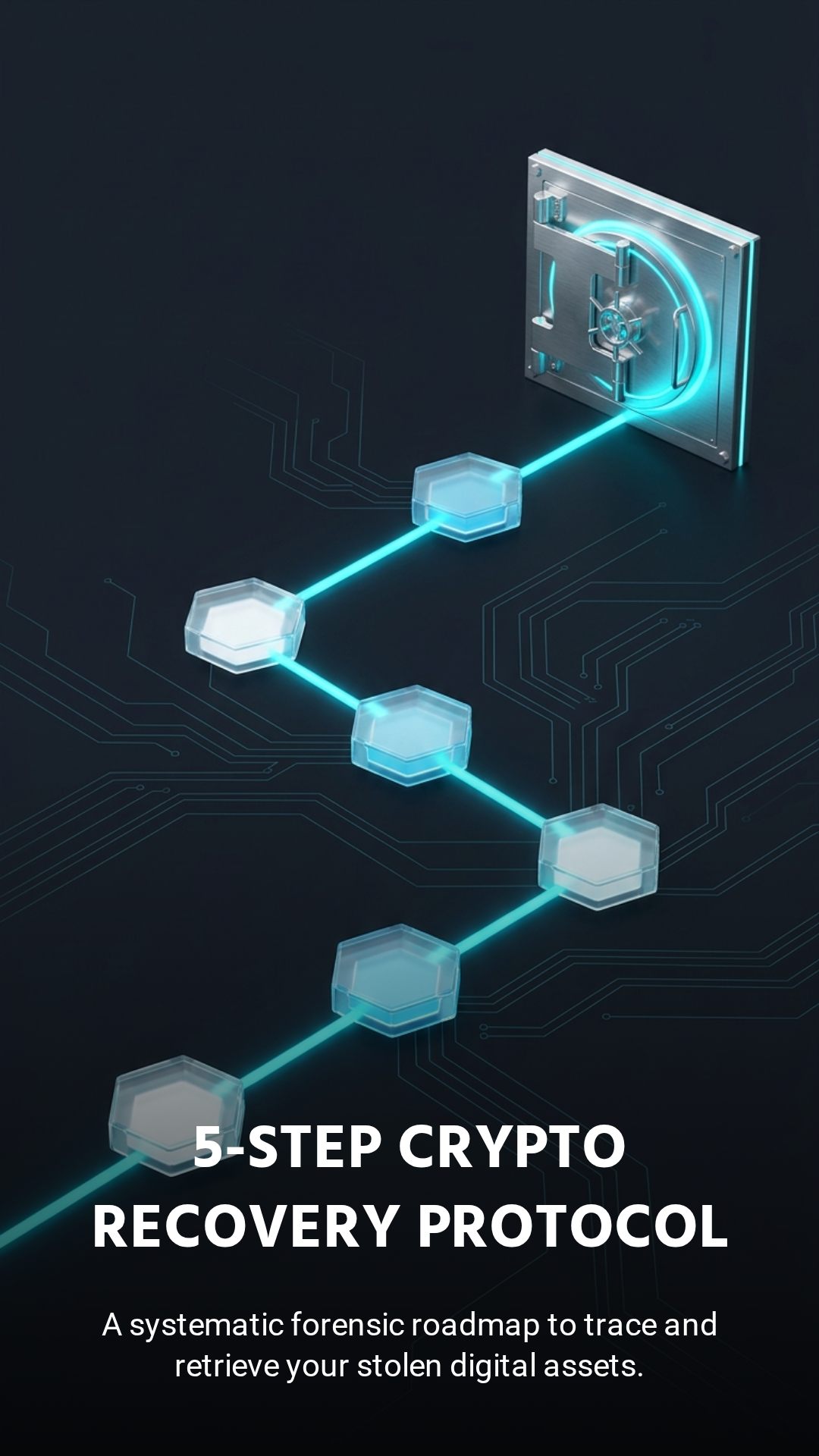
Professional recovery isn’t about “hacking”; it’s about On-Chain Intelligence and Legal Leverage. Here is the 2026 methodology for legitimate asset reclamation.
Phase 1: Blockchain Forensics (The Paper Trail)
Every transaction on a public ledger leaves a digital fingerprint. Professional investigators use tools like Chainalysis, TRM Labs, or Elliptic to map out the movement of stolen funds.
-
Peeling Chains: Scammers often move funds through hundreds of small “micro-transactions” to confuse tracers.
-
Mixers and Tumblers: While services like Tornado Cash have faced heavy regulation, decentralized mixers are still used to “wash” coins.
-
The Goal: To find the “Off-Ramp”—the moment the thief moves the crypto to a Centralized Exchange (CEX) like Binance, Coinbase, or Kraken to trade it for “real” cash (Fiat).
Phase 2: Identifying the Off-Ramp
A thief cannot spend “Stolen Bitcoin” at a grocery store. They eventually need to move it to an exchange that requires KYC (Know Your Customer) documentation. Once the funds hit an exchange, the thief has a name, an IP address, and a bank account attached to them.
Phase 3: The “Freeze” (Legal Intervention)
Once the off-ramping exchange is identified, the investigator works with legal counsel to:
-
Issue a Preservation Letter: Tells the exchange to hold the funds.
-
File a Police Report/IC3 Complaint: Provides the legal weight needed for the exchange to cooperate.
-
Subpoena Power: Courts can order the exchange to freeze the account and return the assets to the rightful owner.
The 2026 Crypto Recovery Checklist
If you have been compromised, you must act within the first 24 to 48 hours. Use this checklist to maximize your chances of recovery:
| Step | Action | Priority |
| 1 | Isolate the Infection: Move any remaining funds to a new, “cold” hardware wallet. | Critical |
| 2 | Document the TXID: Copy the Transaction ID of the theft from the block explorer. | Critical |
| 3 | Cease Communication: Do not talk to the scammer. They will try to “extort” more for a “refund.” | High |
| 4 | Contact the Exchange: If the funds moved to a known exchange, alert their fraud department immediately. | High |
| 5 | File Official Reports: File with the FBI (IC3) or your local national cybercrime unit. | Medium |
Red Flags: How to Spot a Fake Recovery Agent

To outrank the competition and stay safe, you must recognize the anatomy of a recovery scam. Avoid anyone who:
-
Uses Telegram or WhatsApp as their primary office. Real firms have physical offices and LinkedIn-verified staff.
-
Claims to work for the FBI or a Government Agency. Governments do not “moonlight” as private recovery agents.
-
Asks for your Seed Phrase. No legitimate investigator needs your 12-word recovery phrase to track a public transaction.
-
Guarantees 100% Success. In forensics, there are no guarantees. If the thief uses a non-compliant offshore mixer, the trail may go cold.
Advanced Defense: Preventing Future Theft
Recovery is expensive and emotionally taxing. The best strategy for “dominating” the crypto space is Prevention Mastery.
Use Multi-Signature (Multi-Sig) Wallets
For large holdings, do not rely on a single private key. Use a protocol like Gnosis Safe, which requires two or more hardware devices to approve a single transaction.
Revoke Token Approvals
Many “stolen” assets aren’t hacked they are “permitted.” If you interact with a malicious dApp, you may have unknowingly granted it “Unlimited Approval” to spend your tokens.
-
Tool: Use
Revoke.cashorEtherscan Token Approvaltool regularly to clear out old permissions.
The “Honey Pot” Strategy
Advanced users now employ “Honey Pot” wallets decoy accounts with small amounts of capital used to test the security of new DeFi protocols before committing significant liquidity.
The Legal Landscape of 2026
Laws regarding cryptocurrency have matured significantly. In 2026, the Travel Rule and MiCA (Markets in Crypto-Assets) regulations mean that exchanges are more legally obligated than ever to assist victims of theft.
If your loss exceeds $50,000 USD, it is often worth hiring a dedicated legal-tech firm. For smaller amounts, your best bet is a combination of self-guided on-chain tracking (using free tools like Breadcrumbs.app) and aggressive reporting to law enforcement.
Conclusion: Science over Secrets
The era of the “Shadowy Hacker” is over. Recovery in 2026 is a science involving data analytics, forensic accounting, and international law. If you have lost assets, do not look for a shortcut through a “hacker.” Look for a path through the data.
The blockchain is a permanent record of the thief’s mistakes. With the right forensic approach, those mistakes become the key to your recovery.