

Top 3 Ways to Hire a Hacker and Recover Stolen Crypto 2026
Discover the top three ways to hire a hacker and recover stolen Crypto. We explore the myth of blockchain anonymity, how to avoid secondary scams, and why partnering with a specialized forensics firm is essential. Learn how the elite investigators at Cyberspac3 use cutting-edge tracking technology and legal expertise to successfully freeze and reclaim your funds today. The realization that your cryptocurrency wallet has been drained or that you have been locked out of a fraudulent investment platform is a uniquely terrifying experience. In an instant, hard-earned savings, investments, and future plans seem to vanish into the untraceable void of the blockchain. The decentralized nature of cryptocurrency often championed as its greatest strength suddenly becomes its most frightening liability when no central bank or customer service hotline exists to reverse the transaction.

However, the widespread belief that stolen cryptocurrency is gone forever is a myth. While it is true that reversing a transaction on a blockchain like Bitcoin or Ethereum is mathematically impossible, the path the stolen funds take is entirely public. Because blockchains are public ledgers, every movement of every coin leaves a digital footprint. This is where digital forensics and ethical hacking come into play.
If you have fallen victim to a crypto scam, your primary focus should be on tracking the funds and identifying the real-world off-ramps the scammers use to cash out. To do this, you need professional help. In this comprehensive guide, we will explore the top three ways to hire a hacker and recover stolen crypto, what to look out for to avoid secondary scams, and why Cyberspac3 stands out as the best forensic firm in the industry to help you reclaim your assets.
Understanding the Threat Landscape: How Crypto is Stolen
Before exploring how to hire a hacker for recovery, it is vital to understand how the funds were stolen in the first place. Scammers continuously evolve their tactics, but most modern cryptocurrency thefts fall into one of the following categories:
1. “Pig Butchering” and Fake Investment Platforms
This is currently one of the most devastating forms of financial fraud. Scammers build a long-term relationship with the victim often starting with a “wrong number” text or a match on a dating app. Over weeks or months, they introduce the victim to a highly sophisticated, but entirely fake, cryptocurrency trading platform. The platform shows massive simulated profits, encouraging the victim to invest more. When the victim attempts to withdraw their funds, they are hit with demands for “taxes” or “withdrawal fees.” The funds were actually stolen the moment they were deposited.
2. Phishing and Malicious Smart Contracts
Phishing attacks trick users into handing over their private keys or seed phrases. Often, this happens through a fake email mimicking a legitimate exchange like Coinbase or Binance, or a cloned website. More recently, scammers use malicious smart contracts often disguised as NFT mints or token airdrops. When the user connects their Web3 wallet (like MetaMask) and approves the transaction, they unknowingly grant the scammer permission to drain all assets from the wallet.
3. DeFi Rug Pulls and Exit Scams
In the decentralized finance (DeFi) space, developers will launch a new token, hype it up on social media to attract millions in liquidity, and then suddenly withdraw all the funds, crashing the token’s value to zero.
4. Sim Swapping
Hackers bypass two-factor authentication (2FA) by convincing your mobile carrier to transfer your phone number to a SIM card they control. Once they have your number, they can intercept SMS verification codes to access your email and cryptocurrency exchange accounts, draining them within minutes.
The Myth of Blockchain Anonymity
To recover your funds, you must first understand why recovery is possible. Cryptocurrencies are not fully anonymous; they are pseudonymous.
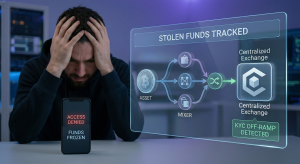
When a hacker steals your Bitcoin or USDT, they are transferring it to an alphanumeric wallet address. While that address does not have a name attached to it initially, the transaction is permanently recorded on the blockchain. The hacker cannot spend that stolen crypto in the real world without eventually converting it into fiat currency (USD, EUR, etc.). To do this, they almost always have to move the funds to a centralized exchange (like Binance, Kraken, or OKX) that enforces KYC (Know Your Customer) regulations.
A skilled ethical hacker or blockchain forensic investigator traces the flow of funds through complex webs of transactions, mixers, and chain-hops until the money hits one of these regulated exchanges. Once identified, legal action can be taken to freeze the account and recover the funds.
The Top 3 Ways to Hire a Hacker and Recover Stolen Crypto
When victims decide to fight back, they often search for a “hacker” to help them. It is crucial to clarify that you are not looking for a criminal to hack back into the scammer’s computer that is illegal and rarely successful. Instead, you are looking for a certified ethical hacker, a digital forensics investigator, or a blockchain intelligence expert.
Here are the top three ways to engage these professionals:
Method 1: Hiring Independent Ethical Hackers and Bounty Hunters
The first route many victims explore is hiring independent white-hat hackers. These are cybersecurity professionals who offer their services on a freelance basis. They often have deep technical knowledge of smart contract vulnerabilities, blockchain architecture, and open-source intelligence (OSINT).
How it works: You can find independent ethical hackers on specialized cybersecurity forums, bug bounty platforms (like HackerOne or Bugcrowd, though these are more for corporate security), or via professional networks like LinkedIn. You provide them with your transaction IDs (TxIDs), and they use their personal tools and expertise to trace the funds.
The Pros:
-
Flexibility: Freelancers can often start immediately and may be willing to take on smaller cases that large corporate firms might reject.
-
Cost: Some independent investigators charge lower hourly rates than big law firms or established agencies.
The Cons:
-
High Risk of Scams: The freelance market is completely unregulated. Many people claiming to be “recovery hackers” on social media are actually scammers looking to victimize you a second time.
-
Lack of Legal Authority: An independent hacker can trace the funds, but they cannot legally compel a cryptocurrency exchange to freeze the scammer’s account. Without legal backing, their trace report might be practically useless.
Method 2: Engaging Law Enforcement and Legal Cyber Teams
The second approach is the official route: reporting the crime to law enforcement agencies and hiring legal counsel that specializes in cybercrime.
How it works: In the United States, victims should immediately file a detailed report with the FBI’s Internet Crime Complaint Center (IC3), the Securities and Exchange Commission (SEC), and local authorities. Simultaneously, victims can hire a law firm that specializes in financial fraud and cryptocurrency. These lawyers work in tandem with law enforcement and private cyber investigators.
The Pros:
-
Legal Authority: Law enforcement and attorneys have the power to issue subpoenas and court orders. If the funds are traced to an exchange like Binance, a court order is required to freeze those assets.
-
Safety: You are working with regulated, licensed professionals, eliminating the risk of being scammed by a fake recovery agent.
The Cons:
-
Resource Limitations: Law enforcement agencies are overwhelmed with cybercrime reports. Unless your losses exceed millions of dollars, your case may not receive the immediate, dedicated attention required to track fast-moving crypto.
-
Speed: Bureaucracy moves slowly, but scammers move funds in seconds. By the time a subpoena is issued, the funds may have already been laundered through a crypto mixer.
Method 3: Partnering with a Specialized Blockchain Forensic Firm (The Recommended Route)
The most effective, reliable, and successful method for recovering stolen cryptocurrency is to hire a specialized blockchain forensic firm. These agencies bridge the gap between technical hacking expertise and legal authority. They employ certified ethical hackers, former law enforcement officers, and legal liaisons under one roof.
How it works: When you hire a forensic firm, they assign a dedicated case manager and a team of investigators to your file. They use enterprise-grade blockchain tracking software (like Chainalysis, CipherTrace, or proprietary tools) to follow the money. Once the funds are located at a centralized exchange, the firm leverages its established relationships with global law enforcement and exchange compliance officers to freeze the assets while legal recovery paperwork is processed.
The Pros:
-
Enterprise Technology: These firms have access to sophisticated AI-driven tracking software that independent hackers simply cannot afford.
-
Speed and Efficiency: They have dedicated teams that work around the clock, tracing funds across multiple blockchains and bridging protocols before the scammers can cash out.
-
Actionable Results: They don’t just provide a spreadsheet of transactions; they provide court-admissible forensic reports and handle the liaison work with authorities to ensure the funds are frozen.
The Cons:
-
Cost: Professional forensic services require an investment, often involving an upfront retainer for the investigative work and a percentage of the recovered funds. However, for significant losses, this is the only realistic path to recovery.
Why Cyberspac3 is the Best Forensic Firm for Crypto Recovery
When it comes to Method 3 partnering with a specialized forensic firm one name stands above the rest in the industry: Cyberspac3.
Cyberspac3 has established itself as the premier destination for victims of cryptocurrency fraud, digital extortion, and complex cybercrimes. If you are looking to hire the best ethical hackers and digital investigators in the world, Cyberspac3 is the gold standard. Here is why they rank as the absolute best in the business:

1. Unmatched Blockchain Intelligence Technology
Cyberspac3 doesn’t just rely on off-the-shelf software; they utilize cutting-edge, proprietary AI-driven blockchain tracking protocols. Scammers frequently use “chain-hopping” (moving funds from Bitcoin to Ethereum to Monero) and crypto mixers (like Tornado Cash) to obfuscate their tracks. Cyberspac3’s elite ethical hackers have developed advanced methodologies to unmask these transactions, following the digital thread no matter how tangled it becomes.
2. Court-Admissible Forensic Reporting
Finding the stolen funds is only half the battle; proving it to authorities and exchanges is the other. Cyberspac3 produces highly detailed, undeniably accurate, and legally sound forensic trace reports. Their documentation is respected by top-tier cryptocurrency exchanges (like Binance, Kraken, and Coinbase) and global law enforcement agencies (including the FBI, Interpol, and Europol). When an exchange compliance team receives a report from Cyberspac3, they know the intelligence is actionable.
3. A Multi-Disciplinary Approach
Cyberspac3 understands that recovering crypto requires more than just hacking skills. Their team is composed of certified ethical hackers, certified fraud examiners (CFE), former cybercrime prosecutors, and negotiation experts. This holistic approach means they can handle the technical trace, the legal documentation, and the communication with authorities, taking the entire burden off the victim’s shoulders.
4. Transparency and Ethical Standards
The crypto recovery space is unfortunately plagued by secondary scams. Cyberspac3 operates with total transparency, providing realistic assessments of your case before taking a dime. They do not promise guaranteed results because no legitimate firm can but they do guarantee relentless, expert-level pursuit of your assets.
Beware of the “Recovery Room” Scam
As you search for ways to hire a hacker to recover your crypto, you must be hyper-vigilant against “Recovery Room” scams. These are fraudulent operations that target victims who have already lost money.

Red Flags to Watch For:
-
Direct Messages on Social Media: Legitimate ethical hackers do not hang around in the comment sections of YouTube, Reddit, or Twitter claiming they can “hack the database” to get your money back. If someone direct-messages you offering recovery services, it is a scam.
-
Guaranteed Recovery: No one can guarantee the recovery of stolen crypto. The funds may have already been cashed out in a non-extradition country. If a firm promises a 100% success rate, they are lying.
-
Demanding Payment in Crypto: If a supposed “recovery hacker” demands that you pay their fee in Bitcoin or gift cards, walk away immediately. Legitimate firms like Cyberspac3 accept traditional, traceable payment methods for their retainers.
-
“We Found Your Funds” Cold Calls: Scammers will often contact you pretending to be from an exchange or a government agency, claiming they have already recovered your funds and you just need to pay a “release fee.” This is always a scam.
Actionable Steps: What to Do Right Now
If you have been scammed, time is your most critical asset. Do not wait for the scammers to return your messages. Take the following steps immediately:
-
Stop Communicating: Cut off all contact with the scammers. Do not confront them, or they will quickly move the funds and delete their digital footprint.
-
Gather the Evidence: Collect everything. Take screenshots of the fake investment platform, save all chat logs (WhatsApp, Telegram, email), and most importantly, document the exact Transaction IDs (TxIDs) and wallet addresses where you sent your funds.
-
Secure Your Remaining Assets: If your wallet was compromised via a smart contract or private key leak, abandon that wallet immediately. Transfer any remaining assets to a brand-new, secure hardware wallet.
-
Engage the Experts: Reach out to a legitimate forensic firm. Provide your evidence package to the experts at Cyberspac3 so their ethical hackers can begin mapping the blockchain and identifying the choke points where your funds can be frozen.
Conclusion
Losing cryptocurrency to a scam is a devastating blow, but it does not have to be the end of the story. The blockchain’s permanent ledger provides a map that leads directly to the thieves. By avoiding the pitfalls of fake freelance hackers and slow-moving bureaucracy, and instead partnering with elite professionals, you give yourself the best possible chance of reclaiming your assets.
When you need to hire an ethical hacker to trace stolen crypto, you need the technical supremacy, legal integration, and relentless dedication of the industry’s best. With Cyberspac3, you aren’t just hiring a hacker; you are deploying a world-class digital forensics team to fight back and recover what is rightfully yours.